
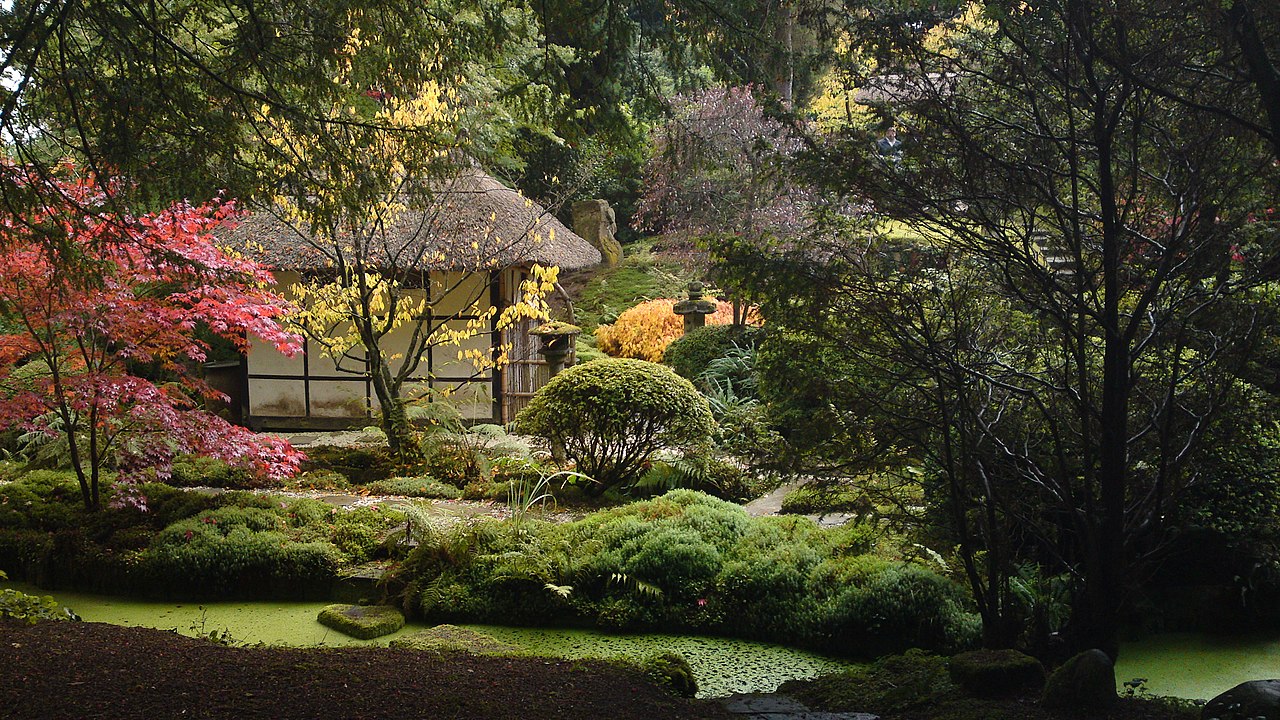
Tatton Park
Photo: royal rear / CC BY-SA 3.0, modified.
Overview
The Japanese Garden in Tatton Park is one of the best-known Edwardian Japanese-style gardens in Britain. It was created after Alan de Tatton Egerton, 3rd Baron Egerton of Tatton, visited the Anglo-Japanese Exhibition in London in 1910 and decided to introduce a Japanese garden at Tatton. Tatton Park describes it as one of the finest examples of a Japanese garden in Europe, created with the involvement of Japanese workmen.
History
The garden belongs to the early twentieth-century phase of Tatton Park’s development. Alan de Tatton Egerton was inspired by the Anglo-Japanese Exhibition of 1910 and commissioned / initiated the garden shortly afterward. The Embassy of Japan’s centenary text notes that Tatton celebrated 100 years since the commissioning of the garden in 2011, supporting a creation date of about 1910–1911. The Gardens Trust gives the active date as c. 1910–present.
Design features
The garden includes a Shinto shrine, tea house, bridges, stone lanterns, water features, carefully placed rocks and stones, and a mound representing Mount Fuji. National Trust material notes that a team of Japanese workmen created the garden, while Tatton Park identifies it as a surviving Edwardian Japanese garden inspired by the 1910 exhibition. Secondary descriptions also mention the Flying Goose Bridge, Almond-Eye Bridge and symbolic Fuji mound.
Garden elements
Bridges
Buildings
Enclosures
Waters and islands
Stones
Shinto elements
Other elements
Current status
Extant and restored Edwardian Japanese garden within the wider Tatton Park Gardens. The garden was created after Alan de Tatton Egerton visited the Anglo-Japanese Exhibition at White City, London, in 1910, and it remains one of Tatton Park’s recognised historic garden areas. It had become overgrown during the twentieth century but was restored in the early 2000s. Today it survives as a highly intact Japanese-style garden with historic structures, planting, water features and symbolic landscape elements. The wider Tatton Park gardens are open to visitors, but the Japanese Garden itself is usually viewed from its perimeter paths rather than freely entered, to protect the fragile historic layout.