Peckham Rye Park
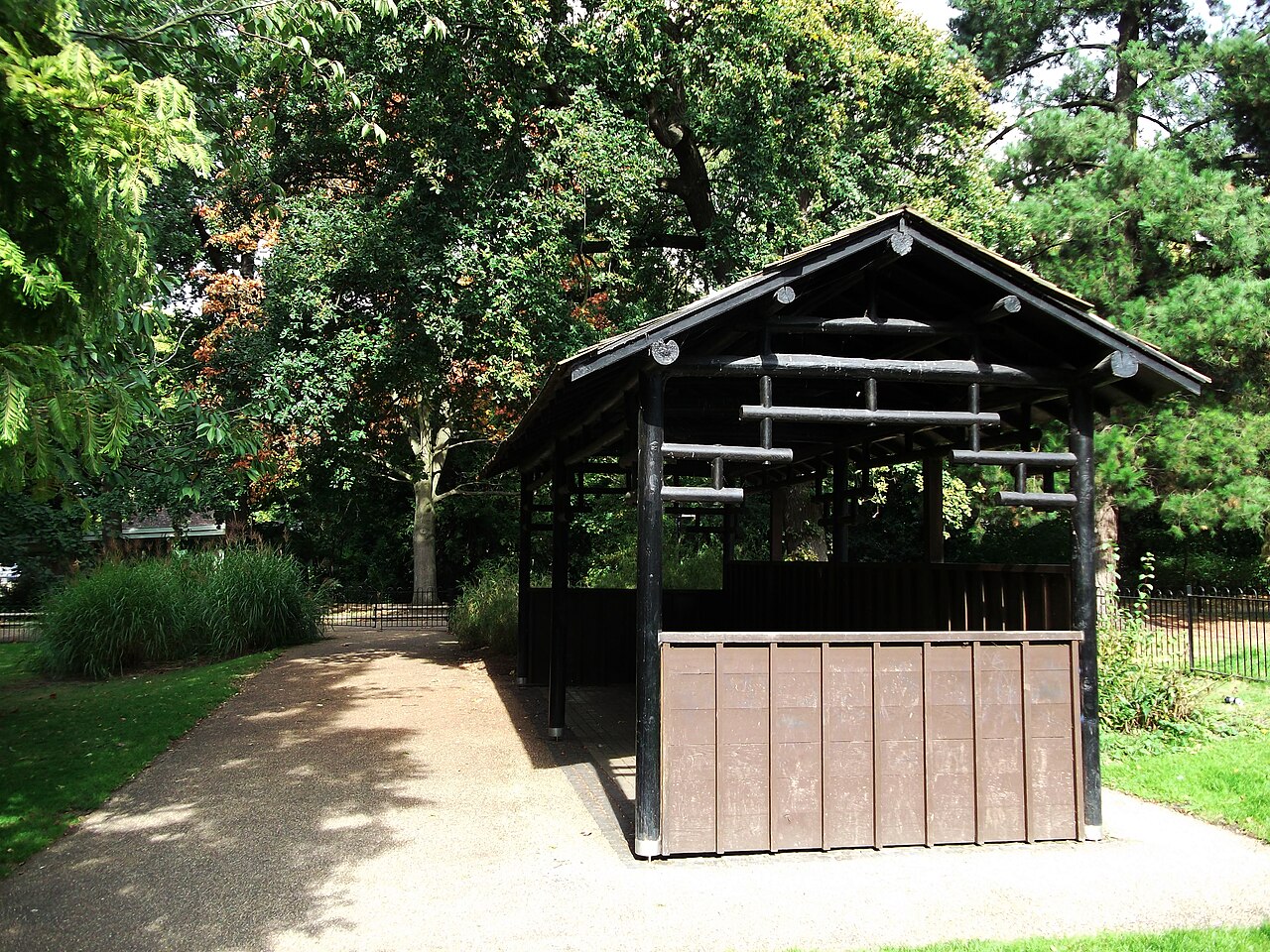
Photo: Philip Talmage / CC BY-SA 2.0, modified.
Overview
The Japanese Garden in Peckham Rye Park is an early twentieth-century Japanese-style public garden in Southwark, London. Southwark Council states that the Japanese Garden opened in 1908 and that the Japanese shelter was restored in 2005. London Gardens Trust also dates the garden to 1908, when Japanese gardens were newly fashionable in Britain.
History
Peckham Rye Park was developed by the London County Council after the land was acquired in the late nineteenth century. The park included several themed ornamental areas, including an Old English Garden, American Garden and Japanese Garden. The Friends of Peckham Rye Park note that the Japanese Garden was created around an existing pond shown on the 1870 Ordnance Survey map, while London Gardens Trust records its 1908 date and later restoration work.
Design features
The garden includes a Japanese shelter, bridge, stream, pond-related water setting and Japanese-style planting. London Gardens Trust records the renewal of the Japanese shelter and bridge, clearance of the choked stream and recovery of original trees and shrubs during restoration works. Southwark Council’s current park description identifies the Japanese Garden as one of the park’s formal garden features.
Garden elements
Buildings
Waters and islands
Stones
Current status
Extant Edwardian Japanese-style garden within Peckham Rye Park, a public municipal park in Southwark. The Japanese Garden opened in 1908 and survives as one of the park’s historic ornamental garden areas, alongside the Sexby Garden, American Garden, arboretum, lake and other public park features. It includes a Japanese shelter, bridge, stream and Japanese-style planting; the shelter was restored in 2005. The garden remains publicly accessible as part of Peckham Rye Park, though its Japanese character today is modest and integrated into the broader Edwardian public park landscape rather than functioning as a fully separate formal Japanese garden.