
The Newt in Somerset
Overview
The Japanese Garden at The Newt in Somerset is a contemporary garden combining a roji-style tea garden, a karesansui dry landscape and a circulating path through a collection of bonsai and Japanese-trained trees. Completed in November 2021, it was designed by horticulturist and Japanese garden designer Maiko Ishida. The composition draws particular inspiration from the historic garden of Chishaku-in Temple in Kyoto, while using stone, timber and other materials sourced from Somerset.
History
The garden was created as part of the continuing redevelopment of the historic Hadspen House estate, now operated as The Newt in Somerset. The wider estate gardens have been shaped by successive designers, including Margaret Hobhouse, Penelope Hobhouse, Nori and Sandra Pope and, in their current overall form, Patrice Taravella. The Japanese Garden was introduced as a new specialist area within this broader collection and opened in 2021.
The design was developed by Maiko Ishida, who is also responsible for the garden’s continuing care. Its principal historical reference is the pond-and-hillside garden at Chishaku-in, traditionally dated to around 1674, although the Somerset garden also incorporates forms associated with Japanese gardens of the fifteenth and sixteenth centuries.
Rather than importing an entire prefabricated Japanese landscape, the project adapted Japanese construction principles to regional resources. Materials include stone from Hadspen Quarry, locally sourced Blue Lias limestone for paving and stepping stones, and oak used for structural and architectural elements.
Design features
The entrance section is arranged as a roji, or tea-garden approach. It includes a bamboo chūmon-style middle gate, stepping stones and a tsukubai water-basin arrangement traditionally associated with ritual purification before entering a tea room.
A suikinkutsu is incorporated into the water arrangement. Water droplets fall into a buried resonating chamber, producing a subtle bell-like sound that can be heard near the basin. This feature adds an auditory dimension to the otherwise restrained tea-garden composition.
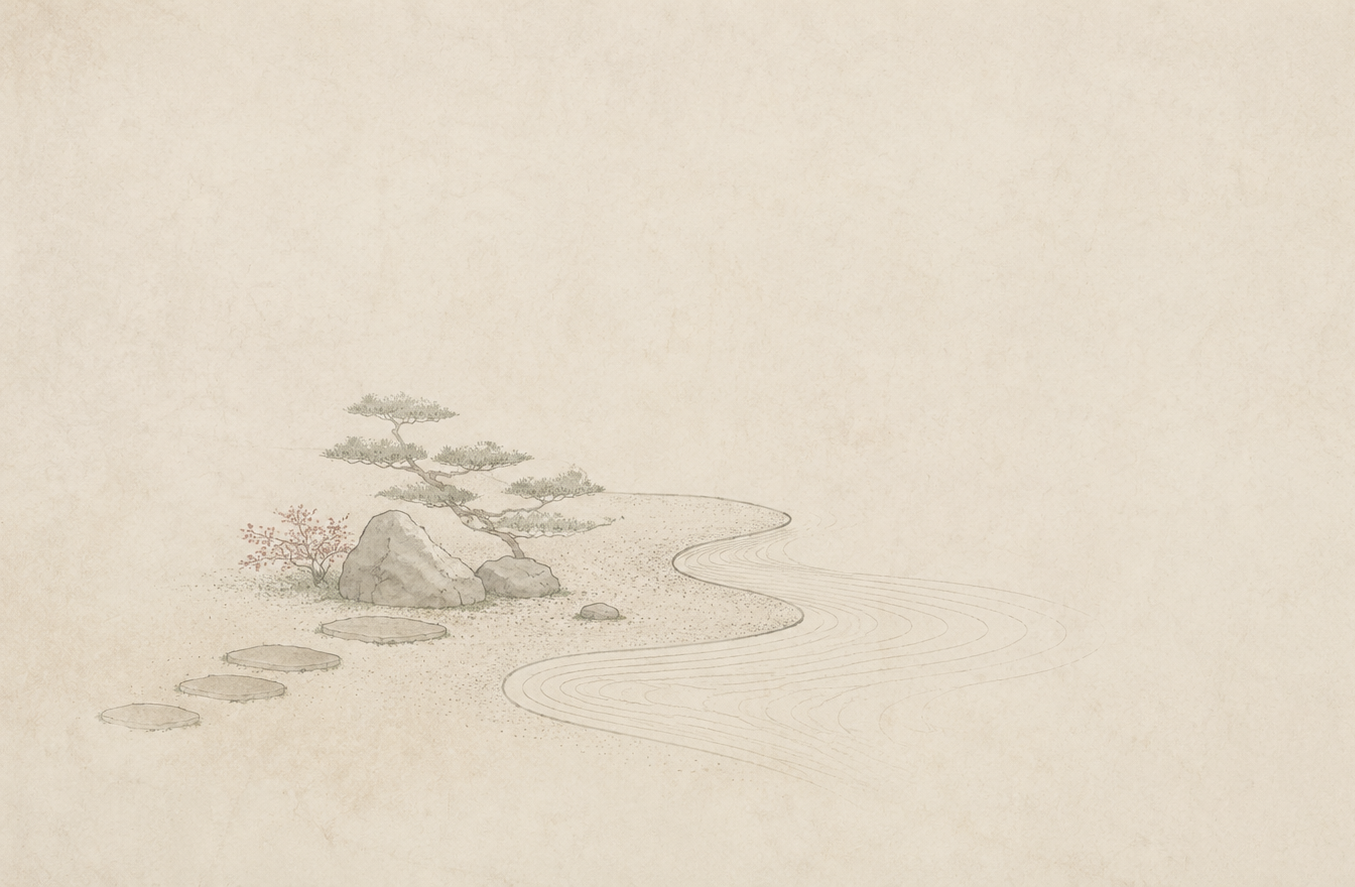
The adjoining dry garden contains raked mineral surfaces, bonsai and a substantial taki-iwagumi, or stone arrangement representing a waterfall. Unlike many dry gardens intended to be viewed from a fixed architectural position, this composition contains a walking route that allows visitors to approach the stones, bonsai and trained vegetation from different viewpoints.
The planting includes bonsai, niwaki and carefully pruned shrubs and trees, creating a strongly controlled landscape of varied scale. The garden therefore brings together tea-garden movement, dry-landscape symbolism, close viewing of specimen trees and a limited strolling experience rather than conforming to one historical garden category.
Garden elements
Enclosures
Stones
Current status
The Japanese Garden remains maintained as one of the principal ornamental areas at The Newt in Somerset. Access is normally included with annual garden membership or a stay at the estate hotel; qualifying RHS members may also receive admission on designated days under the estate’s current arrangements.