
Mount Ephraim
Photo: Marathon / CC BY-SA 2.0, modified.
Overview
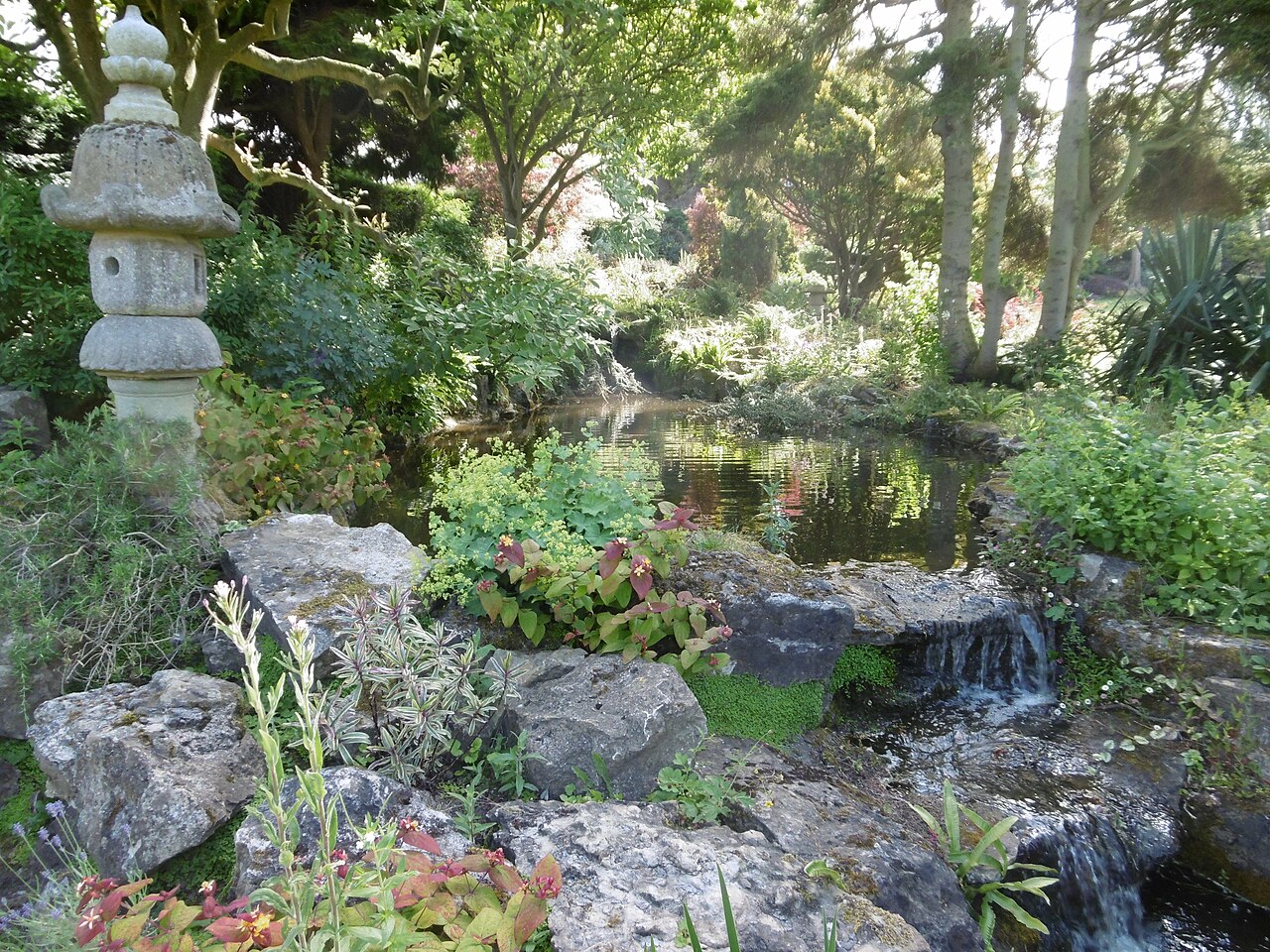
Mount Ephraim Gardens is a privately owned Edwardian terraced garden in Kent, developed by the Dawes family in the early twentieth century. Its Japanese-style element is usually described as a Japanese rock and water garden, rather than a full independent Japanese garden. The official garden description dates the rock garden to 1910–1912 and describes it as a series of pools ornamented with a Japanese stone bridge and lanterns.
History
Mount Ephraim has belonged to the Dawes family since 1695. The present gardens were first laid out in the early 1900s by Willie and Jeanie Dawes, who developed the garden as a long-term family project. Historic England states that the present gardens were laid out mainly by William Charles Dawes in the early twentieth century, and that the Japanese-style rock garden west of the terraces was reputedly laid out by Waterer’s around 1912.
Design features
The Japanese-style rock and water garden is based on a sequence of pools with rockwork, water movement, a Japanese stone bridge and stone lanterns. The planting includes flowering cherries, dwarf rhododendrons, azaleas, shrubs grown for foliage effect, maples, berberis, cotinus, variegated hollies and original large conifers from the early planting. The Japanese element is integrated into the wider Edwardian garden, which also includes terraces, topiary, rose garden, lake, arboretum and grass maze.
Garden elements
Bridges
Waters and islands
Stones
Other elements
Current status
Extant Japanese-style rock and water garden within the wider Mount Ephraim Gardens estate. The Japanese-style feature survives as part of a 10-acre Edwardian terraced garden that remains privately owned by the Dawes family and is open to visitors seasonally. The Japanese garden is not a separate independent Japanese garden in the strict sense, but a rock and water garden within the wider Edwardian estate garden, with Japanese-style ornaments and planting. The main garden was laid out in the early twentieth century, later suffered wartime neglect, and was substantially restored from the 1950s by Bill and Mary Dawes.