
Nikitsky Botanical Garden
Photo: Dmytro Petishkin / CC BY 4.0. modified.
Overview
The Japanese Garden is a Japanese-inspired themed garden area within Primorsky Park of the Nikitsky Botanical Garden near Yalta, Crimea. It is part of the wider botanical garden landscape rather than an independent traditional Japanese garden. The official garden text states that during the reconstruction of Primorsky Park the aim was not to create a Japanese garden “in the full sense of the word,” but to present the main elements of garden art characteristic of Japanese gardens.
History
Primorsky Park was originally laid out in 1912 to mark the 100th anniversary of the Nikitsky Botanical Garden and the centenary of Russia’s victory in the Patriotic War of 1812. It was created as the third park of the botanical garden, with a focus on warm-climate dendrological collections, especially plants from Japan, China and other subtropical regions. The park was closed to visitors for around ten years and a significant part reopened after restoration in 2013. The Japanese Garden was formed as part of this reconstructed Primorsky Park landscape, but a precise establishment date for the Japanese-themed area itself is not given in the official source.
Design features
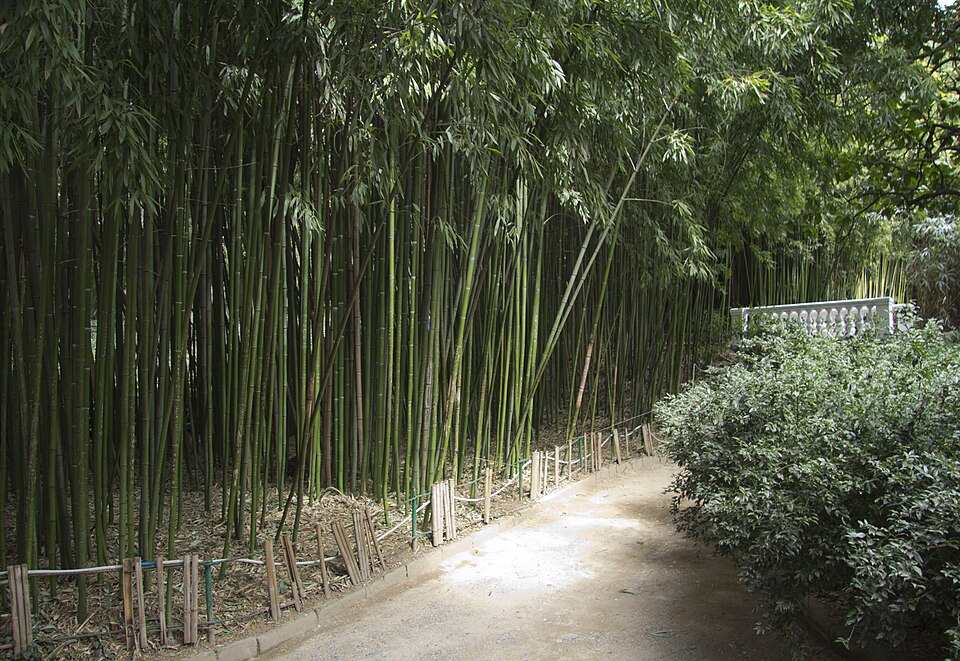
The Japanese Garden presents selected elements associated with Japanese garden art rather than a complete traditional Japanese garden composition. The official description connects the area with stone, water, plants and architectural additions typical of Japanese gardens. Documented elements include stone lanterns, bamboo fences, pavilions, bridges, gates, a torii in a pond, symbolic dry landscape gravel, water features, koi, stones, shaped niwaki-style trees and Acer palmatum ‘Dissectum’.
Garden elements
Enclosures
Waters and islands
Stones
Shinto elements
Other elements
Current status
The Japanese Garden is part of the visitor route in Primorsky Park of the Nikitsky Botanical Garden. Primorsky Park is presented by the garden as a restored park area open to visitors, now also associated with the “Living Dinosaurs” exhibition.