
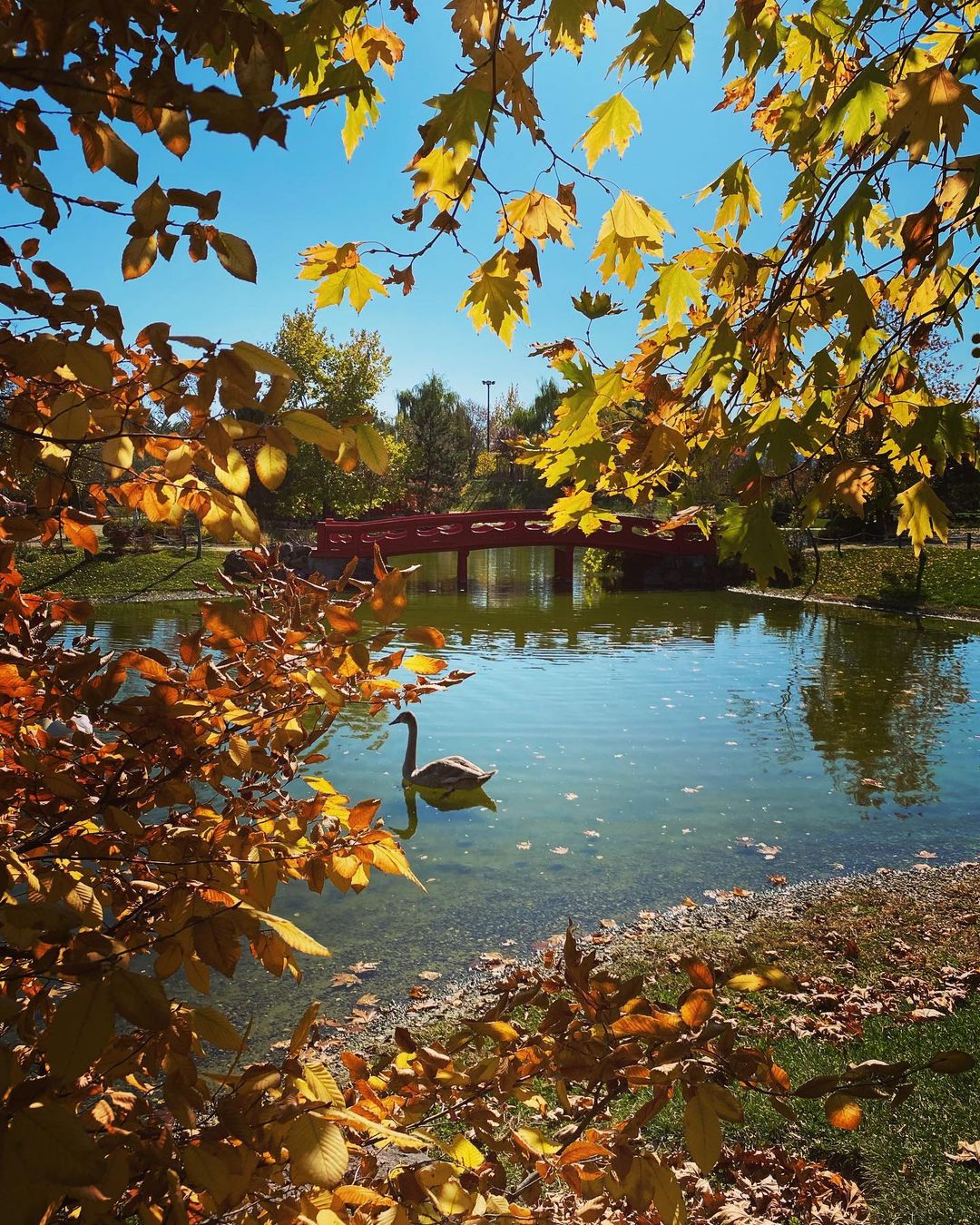
Eskişehir Japanese Garden
Photo: Eskişehir Hayvanat Bahçesi / CC BY-SA 4.0, modified.
Overview
The Eskişehir Japanese Garden is a large pond-centred strolling garden within the Sazova Science, Culture and Art Park in Eskişehir. Created in 2010 as part of the Japan Year in Türkiye, the approximately 22,000-square-metre garden was designed by Japanese landscape architect Professor Masao Fukuhara of Osaka University of Arts. Its ponds, bridges, waterfalls, paths and flowering cherry trees form a chisen kaiyū-shiki, or pond-strolling garden, intended to be experienced through movement around the water landscape.
History
The garden was developed during the 2010 Japan Year in Türkiye, a programme commemorating the friendship and cultural relationship between Japan and Türkiye. The project was supported by the Embassy of Japan in Türkiye, while the design was prepared by Masao Fukuhara, a professor at Osaka University of Arts and an experienced designer and restorer of Japanese gardens outside Japan.
Construction was undertaken using the labour and resources of the Eskişehir Metropolitan Municipality. The garden was formally opened on 5 July 2010 in the presence of Japanese ambassador Nobuaki Tanaka, representatives of Japanese–Turkish cultural organisations, municipal officials and local university leaders.
The Japanese Garden was originally developed as a themed area of the wider Sazova park. The neighbouring Eskişehir Metropolitan Municipality Zoo, opened in 2017, subsequently incorporated the garden into its visitor complex. A municipal visit by Japanese representatives in June 2026 confirmed its continuing importance as a symbol of Japanese–Turkish friendship.
Design features
The garden was designed in the traditional chisen kaiyū-shiki style, in which visitors follow paths around a central water landscape and encounter a sequence of changing views. The composition is organised around ponds, streams and waterfalls, linked by paths and several bridges.
Water forms the principal spatial element, while planted banks, stones and modelled terrain create a miniature natural landscape. The circulation route repeatedly brings visitors close to the water before opening wider views across the ponds, giving the garden a clearly defined strolling structure.
The planting includes Japanese flowering cherries, whose spring blossom is one of the garden’s most prominent seasonal features. Trees, shrubs and waterside vegetation frame the ponds and bridges, while Japanese-style architectural details and red-painted crossings provide visual focal points within the extensive composition.
At approximately 22,000 square metres, the garden is listed by Nodaigarden as one of the largest Japanese gardens in Türkiye. Turkish cultural authorities likewise describe it as the country’s largest Japanese garden.
Garden elements
Bridges
Buildings
Waters and islands
Stones
Shinto elements
Current status
The garden remains maintained within the Sazova park and Eskişehir Zoo complex. It continues to function as a public visitor landscape and as a symbol of cultural friendship between Japan and Türkiye.