
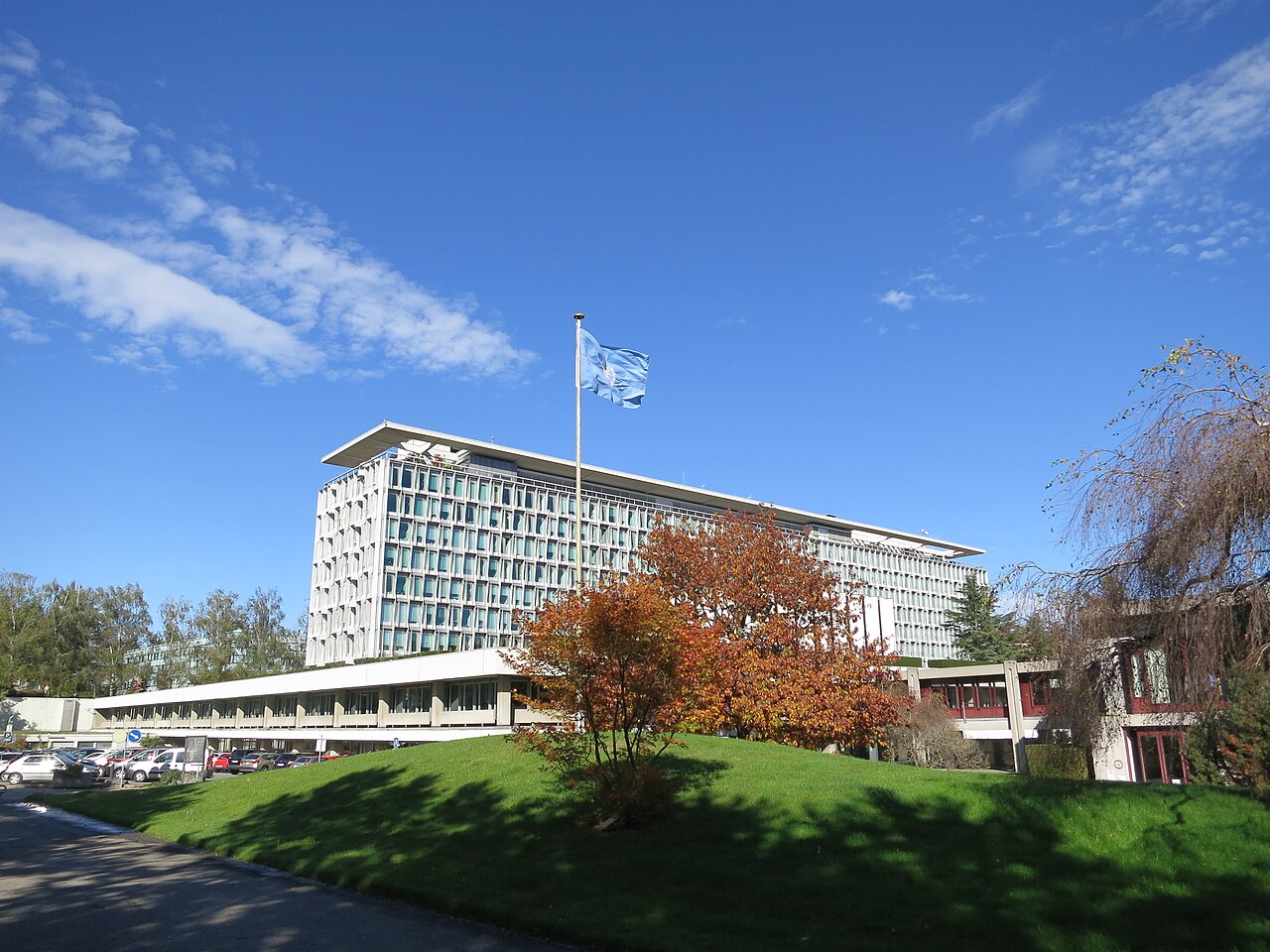
World Health Organization Headquarters
Photo: Thorkild Tylleskar / CC BY-SA 3.0, modified.
Overview
The Japanese Garden at the World Health Organization Headquarters in Geneva was donated by Japan as part of the WHO headquarters landscape. A 1972 WHO publication titled The WHO Japanese garden documents the garden in detail, while the Tokyo University of Agriculture Japanese Garden Archive identifies it as a garden created at the WHO headquarters in Geneva and donated by Japan.
History
The WHO Japanese Garden was created after the construction of the WHO headquarters campus in Geneva. According to the Tokyo University of Agriculture garden archive, Japan donated the garden to the WHO courtyard / headquarters setting, using Japanese garden materials including a pagoda, lanterns, yatsuhashi bridge and bamboo fencing transported from Japan, while natural stones were sourced locally. The design concept is described as peace, reflecting Japan’s post-war identity and the international setting of the WHO.
Design features
The garden includes a mound, waterfall, stream, pond, stone arrangements, pagoda, lantern, yatsuhashi bridge, bamboo fence, iris planting and a tsukubai / water basin area. The composition uses broad, flat stones and gently curving water to express peace, with the water flowing from the mound through the stream into the pond. It is best understood as an institutional Japanese stroll-and-water garden with symbolic peace-garden meaning.
Garden elements
Enclosures
Waters and islands
Stones
Other elements
Current status
xtant Japanese garden within the WHO headquarters grounds in Geneva. It is part of the institutional landscape of the WHO campus and appears to have restricted access connected to WHO premises rather than normal public garden access.