
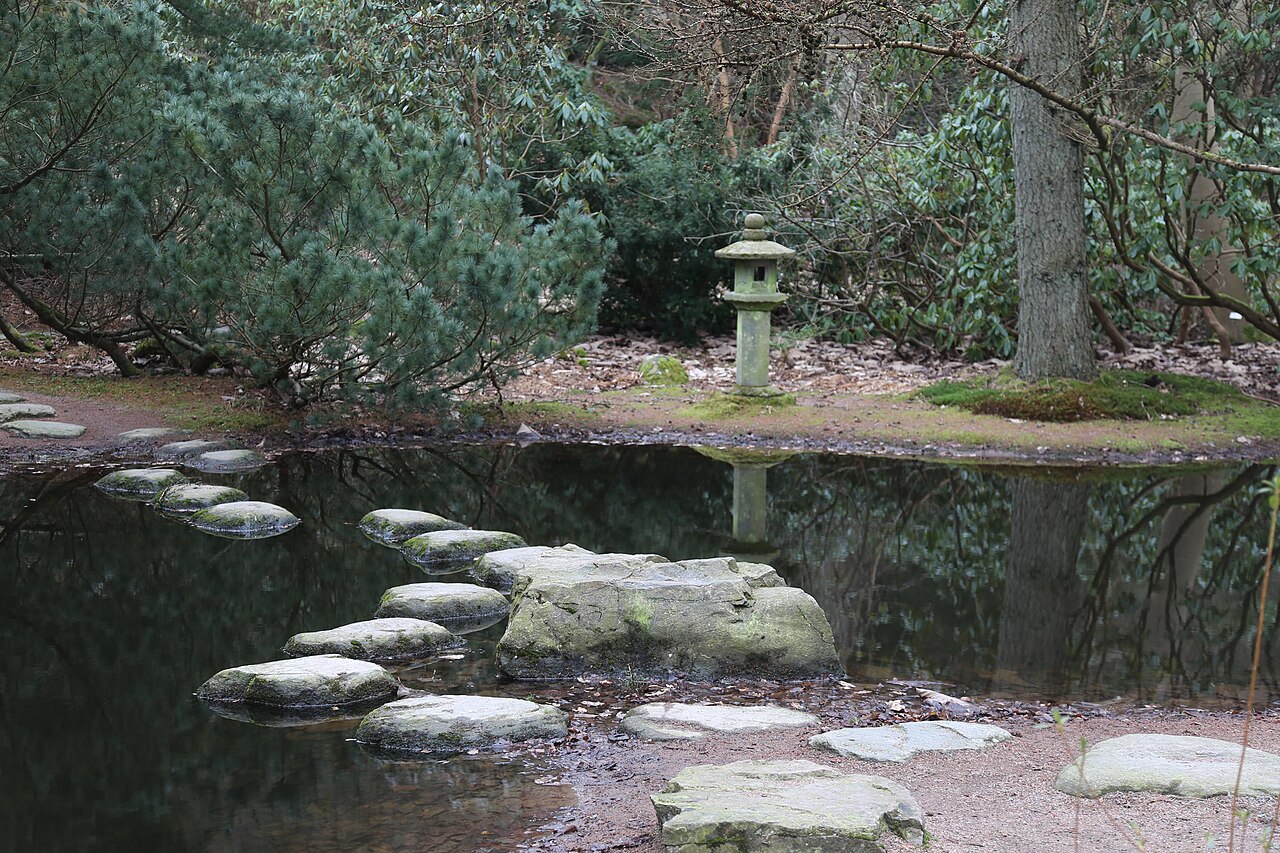
Gothenburg Botanical Garden
Photo: Averater / CC BY-SA 3.0, modified.
Overview
The Japanese Glade, or Japandalen, is a Japanese and East Asian planting area within Gothenburg Botanical Garden. It is not a formal Japanese garden in the strict design sense, but a botanical glade built around Japanese plant collections. The official garden description states that interest in Japanese plants began during the garden’s construction years, with the garden founded in 1923 and seed exchange with Sapporo Botanical Garden starting in the 1920s.
History
Gothenburg Botanical Garden opened in its cultivated form in 1923. During the 1950s, exchanges of scientists and plants with Japan became more substantial. In 1952, director Bertil Lindquist and dendrologist Tor Nitzelius undertook a seed-collecting expedition to Japan, which helped shape the Japanese plant collections in the garden. Current official material notes that Japandalen and the wider garden now contain close to 160 Japanese tree species and at least as many shrubs.
Design features
The Japanese Glade is a planted valley / glade with Japanese and East Asian trees, shrubs and rhododendrons, rather than a classical composition of bridges, lanterns, tea house or dry garden elements. It includes valuable plants collected from wild habitats in East Asia and introduced to Gothenburg’s botanical collections. The wider botanical garden also includes Rhododendron Valley, woodland areas, rock garden and glasshouses, so Japandalen should be understood as a botanical Japanese plant landscape within a larger scientific garden.
Garden elements
Waters and islands
Stones
Other elements
Current status
Extant Japanese plant glade within Gothenburg Botanical Garden, one of the largest botanical gardens in Europe. The Japanese Glade / Japandalen survives as a named thematic planting area focused on Japanese and East Asian woody plants, especially trees, shrubs and rhododendrons. Its roots go back to the garden’s founding in 1923, when seed exchange with Sapporo Botanical Garden began, while its major botanical identity was shaped by post-war collecting, especially the 1952 Japanese expedition by director Bertil Lindquist and dendrologist Tor Nitzelius. It remains publicly accessible as part of the botanical garden.