
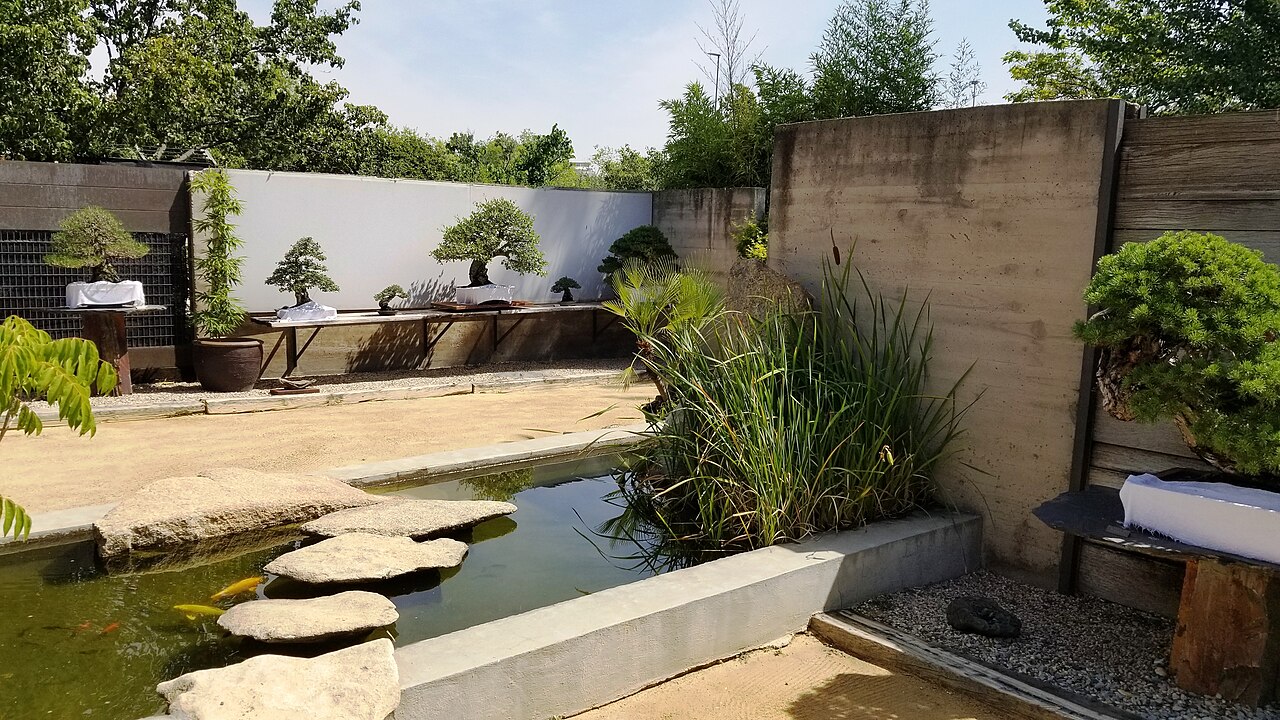
Luis Vallejo Bonsai Garden
Photo: Escuadro / CC BY-SA 4.0, modified.
Overview
The Jardín Bonsái Luis Vallejo, located within Jardín de la Vega in Alcobendas. Alcobendas City Council lists the site as Jardín de los Bonsáis (japonés) within Jardín de la Vega, together with a nature classroom and other park facilities. The garden houses the Luis Vallejo bonsai collection and is considered one of the most important bonsai collections outside Japan.
History
The garden opened in 1995 and was created by Spanish landscape architect and bonsai specialist Luis Vallejo. Vallejo’s own site states that the garden was inaugurated in 1995 and is his work, emphasising that the collection and the garden setting should be understood together. The site creates a sequence of spaces where trees, water, stones, background planting and display architecture frame the bonsai collection as a lived garden experience rather than a conventional museum display.
The project was developed in association with Alcobendas municipality and became a public cultural garden dedicated to the presentation, study and dissemination of bonsai. Secondary sources state that the museum / garden was designed by Luis Vallejo with the assistance of architect Antón Dávila, in the style of a Japanese garden and including a koi pond. Vallejo was later awarded the Order of the Rising Sun in 2008 for his contribution to the promotion of Japanese culture abroad.
The site should be kept distinct from later or broader references to “Jardín Japonés de Alcobendas” in popular media, some of which describe a 2010 / 2011 Japanese-garden project in the wider Parque de la Vega area. For this database entry, the better documented and historically stable record is the 1995 Jardín Bonsái Luis Vallejo within Jardín de la Vega.
Design features
The garden is a bonsai-focused Japanese-style garden rather than a classical stroll garden. Its composition uses display terraces, water, stones, background planting, koi pond elements and carefully staged views to present bonsai as living landscape forms. The garden contains more than 200–300 bonsai specimens according to recent press and reference sources, combining Spanish native species with Japanese and other international material.
Garden elements
Waters and islands
Stones
Current status
Extant public bonsai and Japanese-style garden within Jardín de la Vega. It remains open to visitors during stated opening hours and functions as both a garden and a bonsai museum.