
Jevremovac Botanical Garden
Photo: Karolina Đukić / CC BY-SA 4.0, modified.
Overview
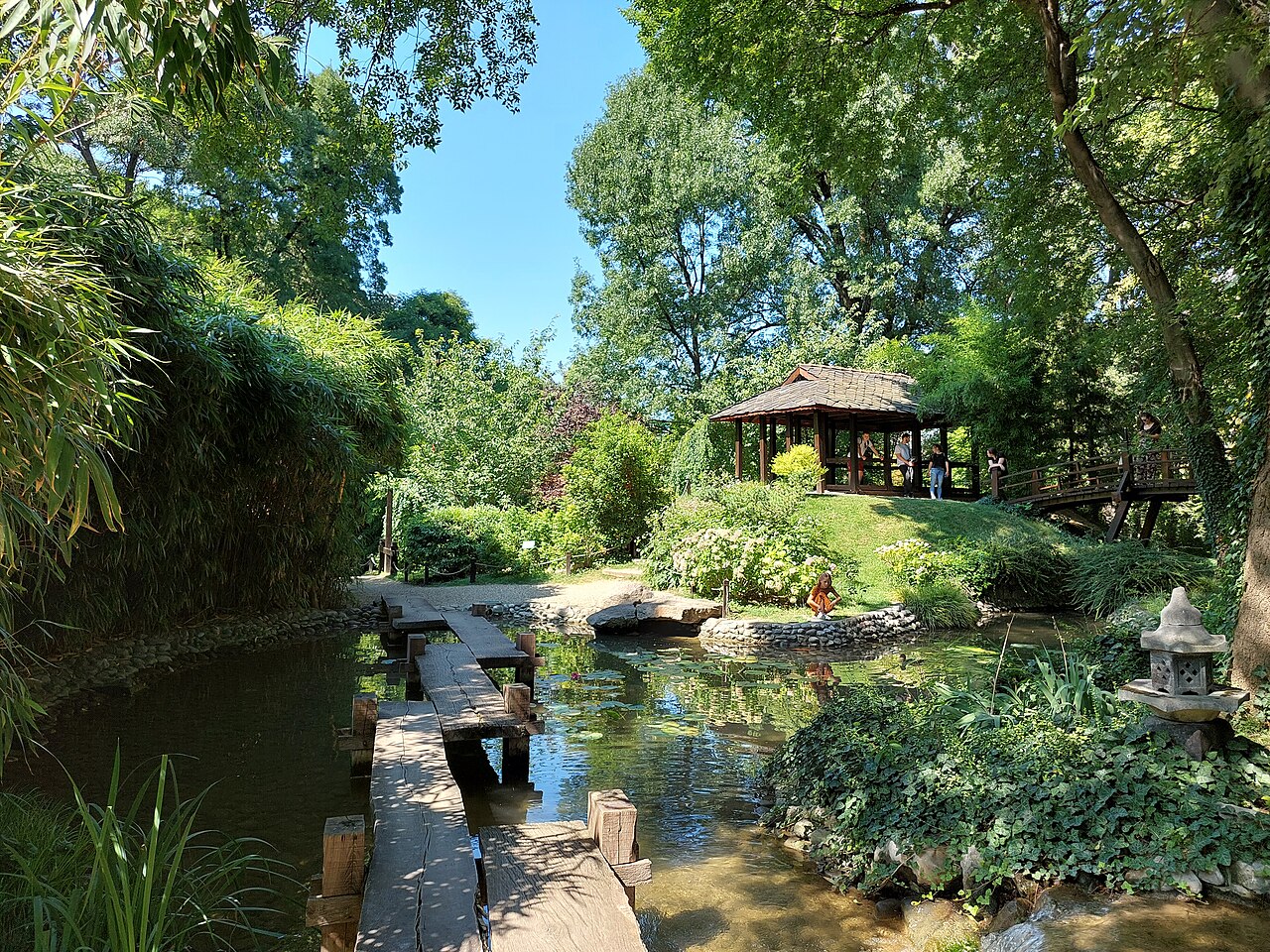
The Japanese Garden is a 2,000-square-metre landscape garden within the Jevremovac Botanical Garden in central Belgrade. Opened in 2004, it was designed by Serbian landscape architects Vera Grbić and Mihailo Grbić as a miniature representation of natural scenery. A pond, stream, cascades, rocks, bridges, a pavilion and East Asian planting form a walk-through composition within the historic botanical garden.
History
The wider Jevremovac Botanical Garden was founded in 1874 at the initiative of botanist Josif Pančić. In 1889, King Milan Obrenović donated the present estate to the Great School of Belgrade, on condition that it be named Jevremovac after his grandfather, Jevrem Obrenović. The institution is now administered by the Faculty of Biology of the University of Belgrade.
The Japanese Garden was developed through the efforts of landscape architects and university professors Vera Grbić and Mihailo Grbić. It was financed through Japanese support, with assistance from the Embassy of Japan in Belgrade, and formally opened on 18 May 2004.
Later improvements included the reconstruction of the garden’s large pond and the planting of eight weeping Japanese cherry trees donated to the botanical garden. These additions strengthened both its botanical collection and its representation of Japanese seasonal planting.
Design features
The garden is conceived as a “garden within a garden”, enclosed within the larger arboretum and designed to symbolise a natural landscape in miniature. Its principal elements are stone, water and plants, arranged with restrained lines, colours and asymmetrical groupings.
A stream descends through a sequence of small cascades and waterfalls into a central pond planted with water lilies. The pond is supplied with water drawn from a natural underground source approximately 100 metres beneath the site. Stone-lined banks, rock compositions and wooden crossings structure the water landscape.
Visitors move through the garden using paths, stepping routes and wooden bridges, eventually reaching a pavilion positioned on a small raised mound. The combination of water, bridges and changing viewpoints gives the composition the character of a compact strolling garden, rather than a garden intended to be viewed from only one fixed position.
The planting includes Japanese cherries, maples, bamboo, roses, clerodendrons and other plants of East Asian origin. Mature trees inherited from the surrounding arboretum provide shade and help integrate the newer garden into the historic landscape of Jevremovac.
Garden elements
Bridges
Buildings
Enclosures
Waters and islands
Stones
Other elements
Current status
The Japanese Garden remains maintained as one of the principal visitor attractions of Jevremovac Botanical Garden. It is accessible during the botanical garden’s public opening hours and continues to serve botanical, educational and recreational purposes.