
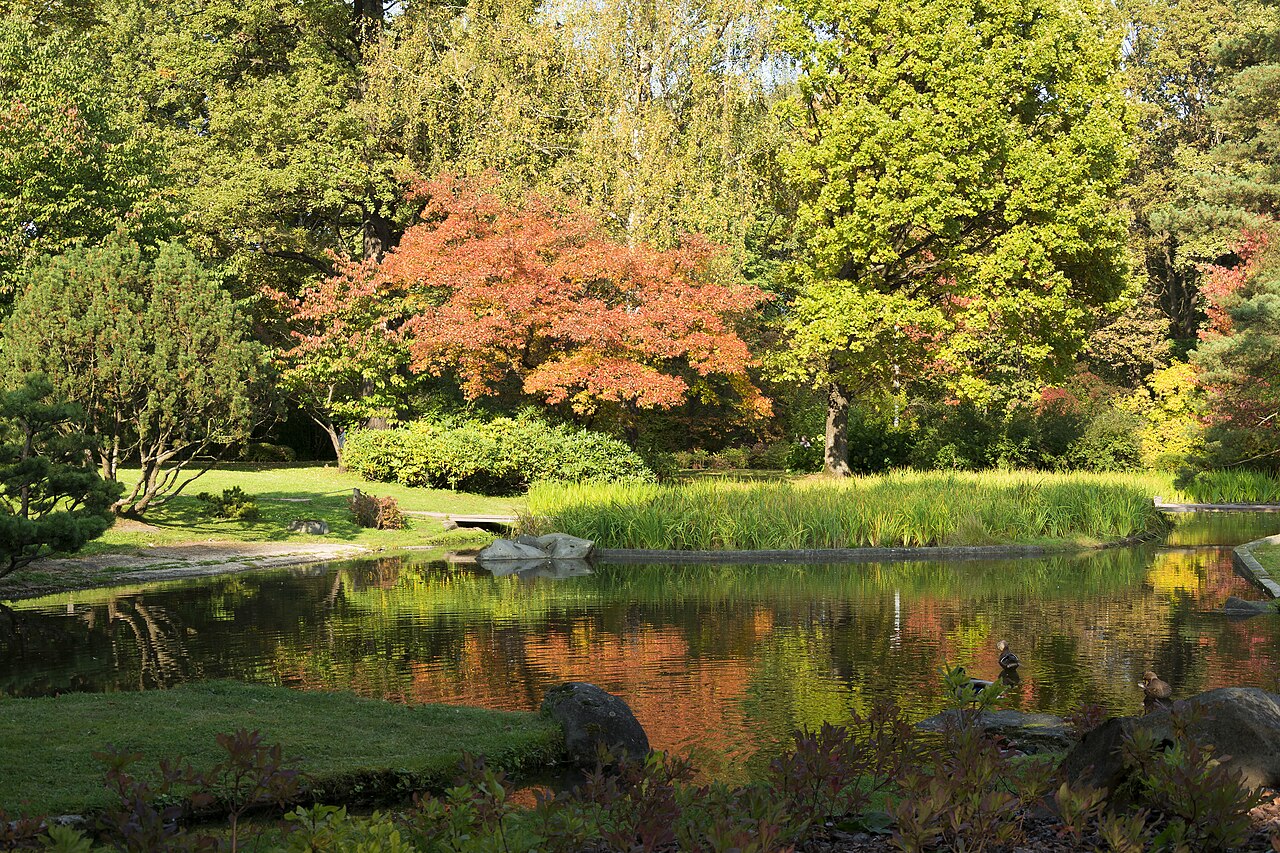
Moscow Botanical Garden
Photo: Andrey Korzun / CC BY-SA 4.0, modified.
Overview
The Japanese Garden in Moscow is a 2.7-hectare Japanese-style garden in the north-eastern part of the Main Botanical Garden of the Russian Academy of Sciences. It was the first traditional Japanese garden opened in the USSR, completed after construction work from 1983 to 1987 and opened in 1987. The garden was designed by Japanese landscape architect Ken Nakajima, with architectural structures by Takeo Adachi.
History
The idea for the garden is associated with Pyotr Ivanovich Lapin, then deputy director of the Main Botanical Garden, and Akira Shigemitsu, the Japanese ambassador in Moscow. Formal negotiations began in 1978, and construction took place between 1983 and 1987 with Japanese institutional support and the participation of the Japanese firm Watanabe-Tomi.
Design features
The garden was built as a traditional Japanese landscape composition, with shaped terrain, stones, winding paths, water, authentic pavilions, a pagoda, bamboo gate, stone lanterns and Far Eastern planting. It is especially known for spring sakura flowering, rhododendrons, maples and other Japanese / East Asian plants.
Garden elements
Bridges
Buildings
Enclosures
Waters and islands
Stones
Other elements
Current status
Extant Japanese garden within the Main Botanical Garden in Moscow. It is a separate paid-access garden area, usually open seasonally from spring to autumn.