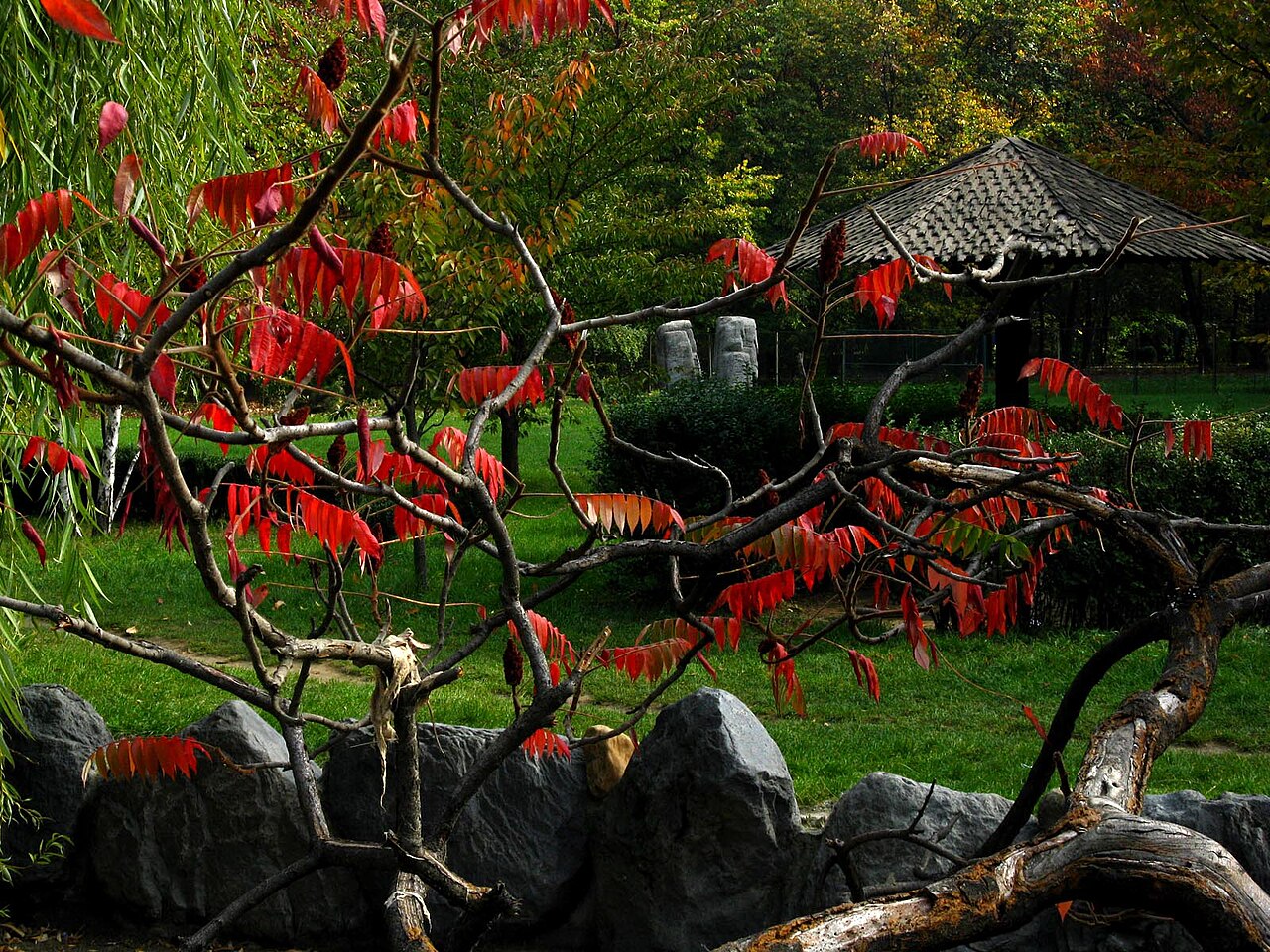
Herăstrău Park
Photo: Whitepixels / CC0 1.0, modified.
Overview
The Japanese Garden in Bucharest is located in King Michael I Park, still widely known as Herăstrău Park. Recent Bucharest municipal material states that the Japanese Garden has existed in Herăstrău since 1989, while older descriptions identify a major 1998 arrangement made with the support of the Embassy of Japan in Romania and the Japanese World Exposition Commemorative Foundation. For database purposes, the safest date is 1989; re-laid / formally developed in 1998.
History
Herăstrău Park was created around Herăstrău Lake and opened in 1936; it was later renamed King Michael I Park, though the older name remains common in daily use. The Japanese Garden belongs to the later thematic development of the park, located within one of Bucharest’s largest and most visited public green spaces.
The chronology is not perfectly consistent across sources. Bucharest municipal press and 2026 local reporting state that the Japanese Garden has existed in Herăstrău since 1989. Earlier image documentation and travel sources state that it was arranged in 1998 with support from the Embassy of Japan in Romania and the Japanese World Exposition Commemorative Foundation. This likely reflects an earlier Japanese-themed garden area followed by a more formal 1998 arrangement or redevelopment.
The garden was restored in 2017 with support from the Embassy of Japan, in partnership with Bucharest Municipality and the city’s lake, park and recreation administration. Reporting on the restoration credits a team of Japanese specialists and Romanian volunteers led by Takuhiro Yamada, representative of a Kyoto landscape association. In 2026, the city planted additional Japanese cherries and other Japanese-associated plants, bringing the cherry-tree total to 85 according to contemporary reports.
Design features
The garden is best known for its Japanese cherry trees and annual hanami celebrations. Recent reports state that the garden contains cherry blossoms, bonsai, maples and bamboo, while visitor descriptions also mention Japanese acacia with weeping branches. The garden functions mainly as a public ornamental and seasonal-flowering Japanese-themed park area rather than as a strict dry, tea or classical strolling garden.
Garden elements
Bridges
Buildings
Enclosures
Waters and islands
Stones
Other elements
Current status
Extant public Japanese garden in King Michael I Park. The garden has recently been expanded and replanted, especially with Japanese cherry trees, and remains a major public hanami site in Bucharest.