
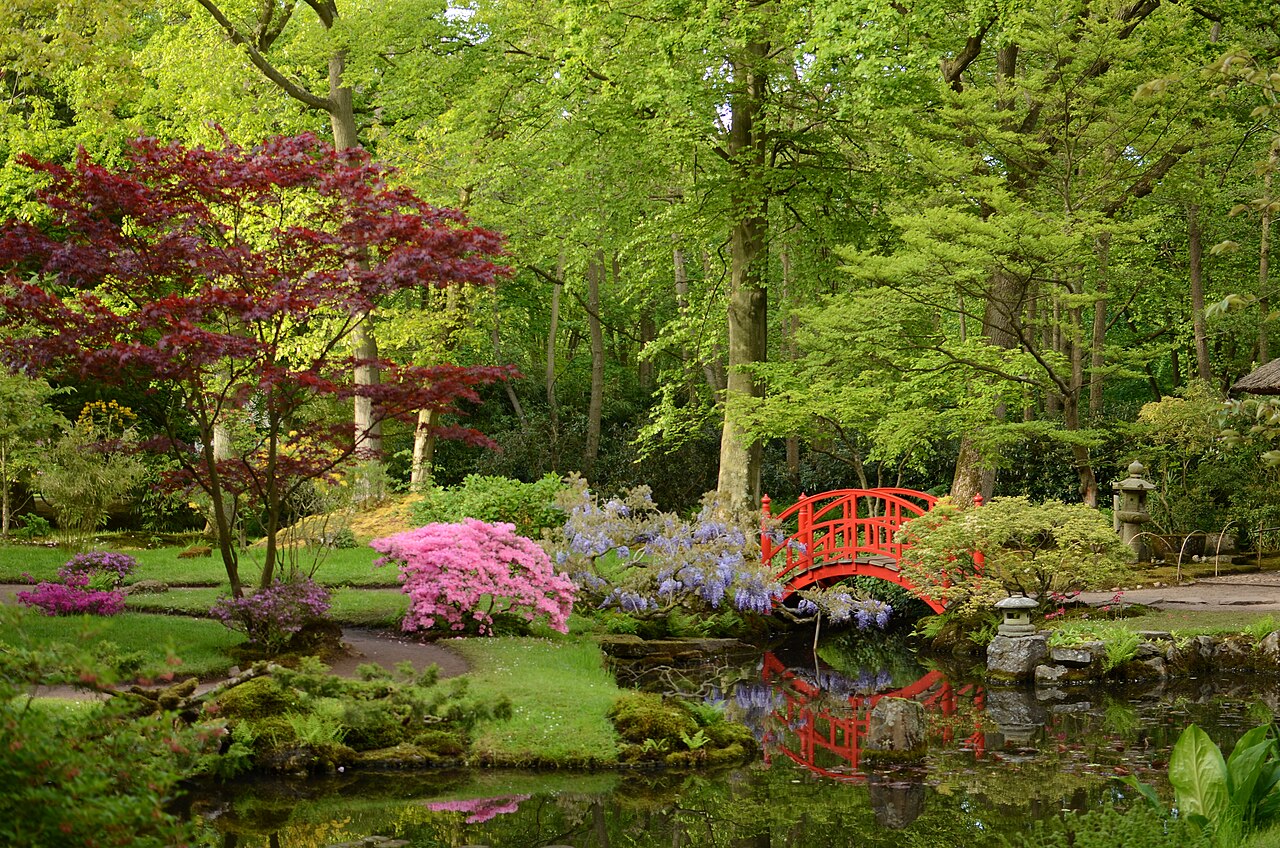
Clingendael Japanese Garden
Photo: Steven Lek / CC BY-SA 4.0, modified.
Overview
The Clingendael Japanese Garden is a historic Japanese garden on the Clingendael Estate in The Hague. It was laid out in the early twentieth century by Marguérite Mary Baroness van Brienen, known as Lady Daisy, who owned the estate and travelled several times to Japan. The Hague’s official visitor information describes it as the only Japanese garden in the Netherlands dating from around 1910, giving it exceptional historical value.
History
Lady Daisy travelled to Japan by ship and brought back lanterns, a water barrel, statuettes, bridges, a pavilion and plants for the garden. The wider Clingendael estate was later sold to the Municipality of The Hague in the 1950s and opened to the public, while the Japanese Garden remained a specially protected historic feature. The Embassy of Japan in the Netherlands notes that the garden is now maintained and operated by the City of The Hague.
Design features
The garden contains a serene pond, meandering brook, winding paths, bridges, pavilion, stone lanterns, Buddha figures, water features and historic Japanese planting. The Hague’s official material states that several original objects were shipped from Japan and remain part of the garden. The layout has remained largely intact, which is one reason for its restricted opening schedule.
Garden elements
Bridges
Buildings
Enclosures
Waters and islands
Stones
Other elements
Current status
Extant and highly protected historic Japanese garden within the wider Clingendael Estate. It is considered the only Japanese garden in the Netherlands dating from around 1910 and has high historical value. The garden remains largely intact in its original layout, including the pond, winding paths, brook, pavilion and imported Japanese ornaments. It is managed by the Municipality of The Hague and is opened only for short seasonal periods because of its fragility. For 2026, the official spring opening is listed as 23 April – 7 June, daily from 10:00 to 20:00.