
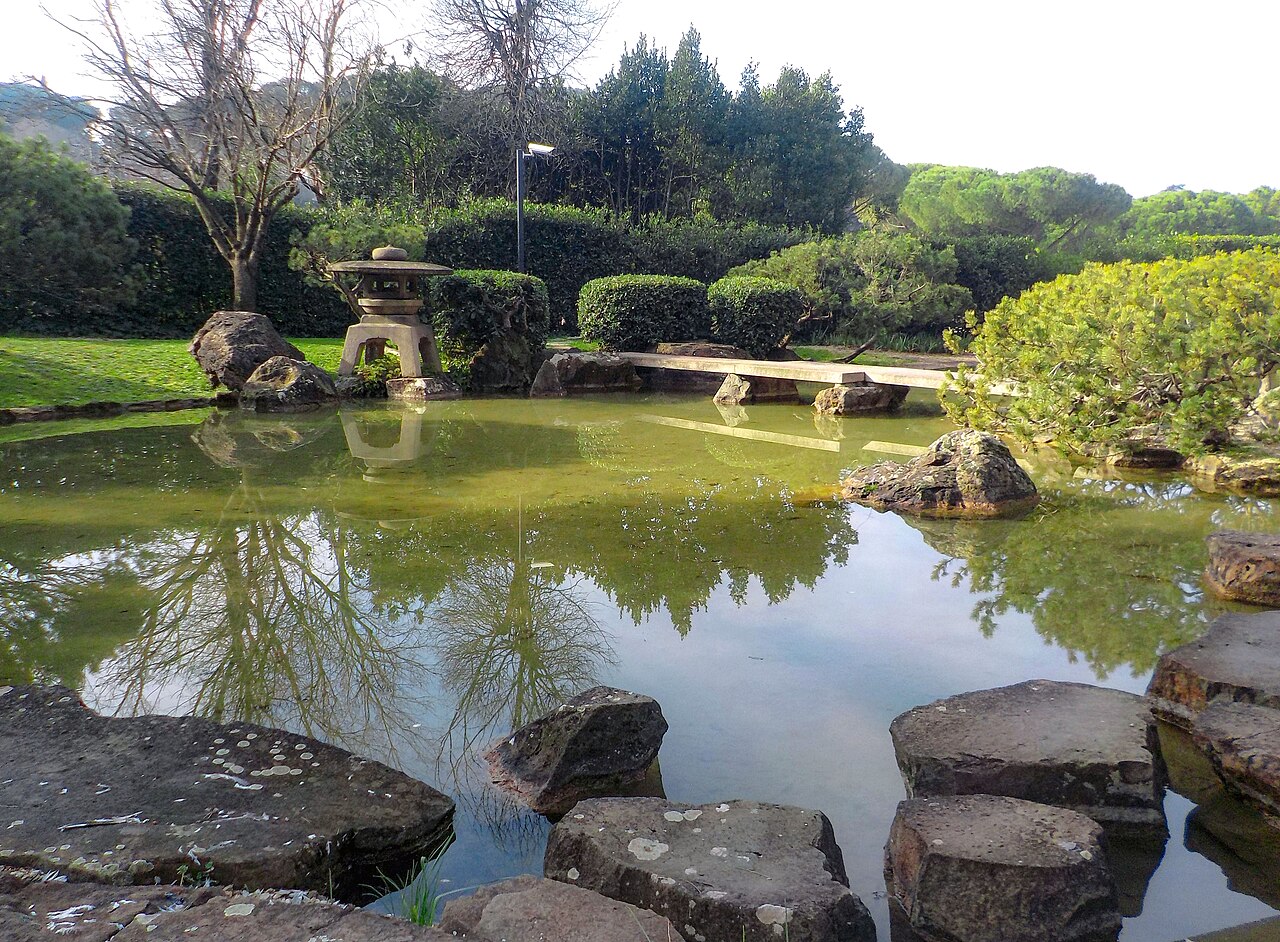
Japan Cultural Institute
Photo: Albarubescens / CC BY-SA 4.0, modified.
Overview
The Japanese Garden at the Japan Cultural Institute in Rome is a small but significant Japanese garden in the Parioli district, near Villa Borghese and the foreign academies. It was designed by Ken Nakajima and built in 1962 as part of the cultural institute complex. Turismo Roma describes it as the first Italian garden designed by a Japanese landscape architect, while architectural heritage sources identify it as a sen’en-style pond garden.
History
The garden was created at the same time as the Japan Cultural Institute building, which was designed by Japanese architect Isoya Yoshida. The building combines traditional Japanese architectural references with modern concrete architecture, while the garden provides a softer pond-and-stroll setting around it. Ken Nakajima later also designed the Japanese garden section of the Rome Botanical Garden, which helps place the institute garden as part of a wider post-war Japanese cultural diplomacy landscape in Rome.
Design features
The garden is a sen’en, or pond garden. It includes a pond, waterfall, rocks, small islands, a bridge and a stone lantern. Planting includes cherry trees, wisteria, irises, pines and other Japanese-associated plants; some descriptions also note Mediterranean elements such as olive trees, used to symbolise friendship between Italy and Japan.
Garden elements
Bridges
Buildings
Waters and islands
Stones
Other elements
Current status
Extant Japanese pond garden within the Japan Cultural Institute in Rome. The garden was designed by Japanese landscape architect Ken Nakajima and built in 1962, together with the institute building designed by Isoya Yoshida. It is generally described as the first Japanese garden in Italy designed by a Japanese landscape architect, and some sources describe it more broadly as the first Japanese garden in Europe designed or built by Japanese specialists. The garden remains part of the cultural institute and is accessible only through guided visits or special opening periods, not as a normal public park.