
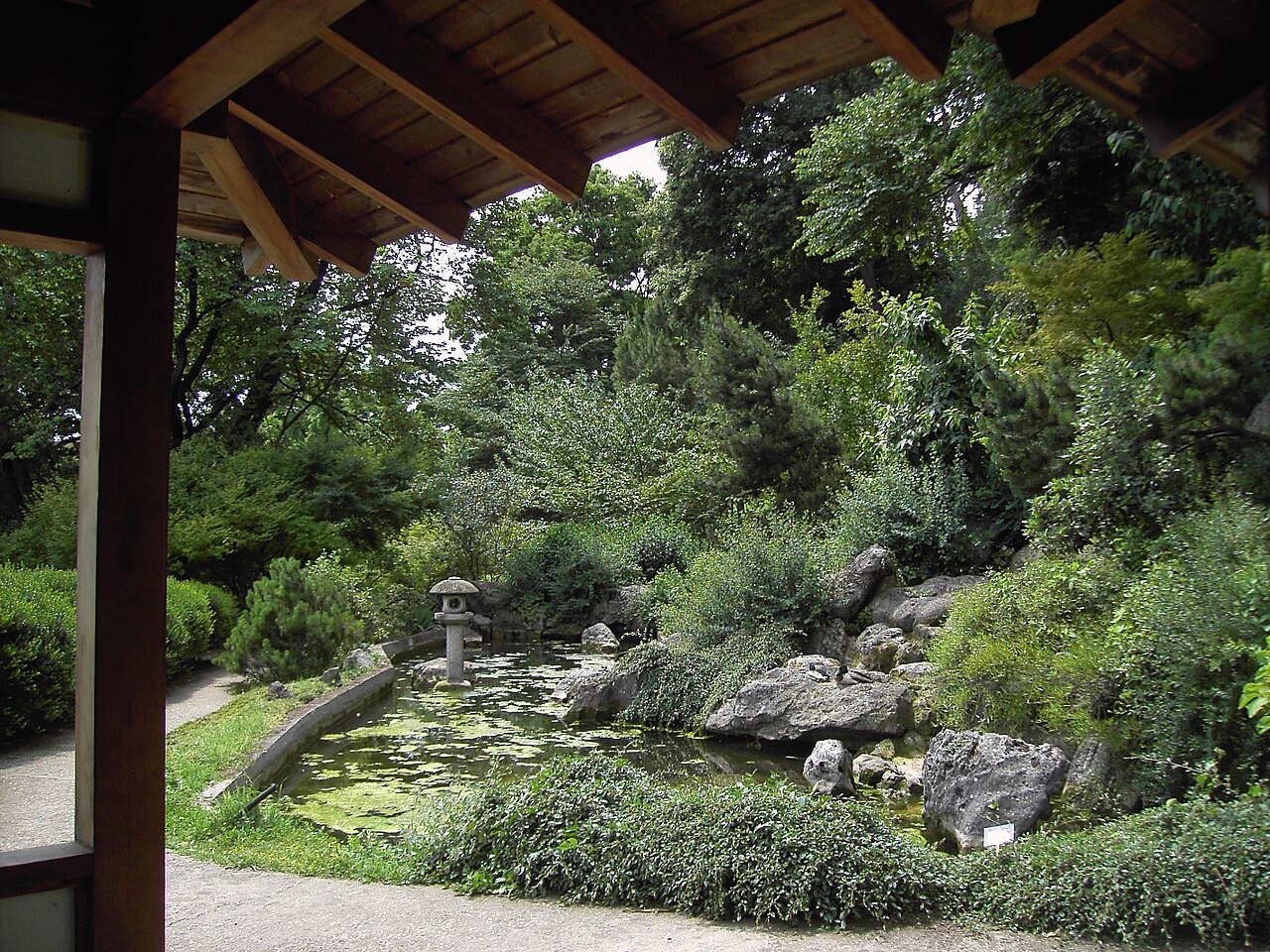
Botanical Garden of Rome
Photo: Lalupa, public domain, via Wikimedia Commons, modified.

Overview
The Japanese Garden of the Botanical Garden of Rome is a Japanese-style garden on the slopes of the Gianicolo within the Orto Botanico di Roma. It was created between 1990 and 1994 to a design by Japanese landscape architect Ken Nakajima, who also designed the earlier Japanese Garden of the Japan Cultural Institute in Rome. The garden is one of the botanical garden’s named thematic areas.
History
The Botanical Garden of Rome occupies the historic garden area of Palazzo Corsini in Trastevere and has been the university botanical garden since the late nineteenth century. The Japanese Garden belongs to a later phase of thematic garden development within this older botanical setting. It was realised between 1990 and 1994 on a project by Takeshi / Ken Nakajima, extending Rome’s Japanese garden history beyond the better-known garden of the Japan Cultural Institute.
The garden was conceived as a Japanese landscape garden adapted to the sloping site below the Gianicolo. A later presentation of the dedicated publication on the garden describes it as about 3,500 m², designed by Nakajima in 1990, and belonging to the tsukiyama type, or artificial-hill garden. Unlike a fixed-view dry garden, it is organised around movement through successive focal scenes.
In recent years the garden has also become associated with hanami events at the Botanical Garden of Rome. The official 2026 event notice presents the garden’s Japanese cherry blossoms as the focus of a spring programme from 4 to 6 April 2026, showing that the site is still actively interpreted as a Japanese cultural landscape within the botanical garden.
Design features
The garden is characterised by water features, small waterfalls and two ponds. The official Orto Botanico page lists Japanese and East Asian plantings including Acer palmatum, Acer buergerianum, Camellia sinensis, Magnolia stellata, Pinus thunbergii and Prunus subhirtella. The design uses the slope, water movement and planted scenes to create a walking garden rather than a dry contemplative courtyard.
Garden elements
Bridges
Buildings
Enclosures
Waters and islands
Stones
Other elements
Current status
Extant Japanese garden within the Botanical Garden of Rome. It remains accessible with normal botanical garden admission and is especially visited during cherry blossom / hanami events.