
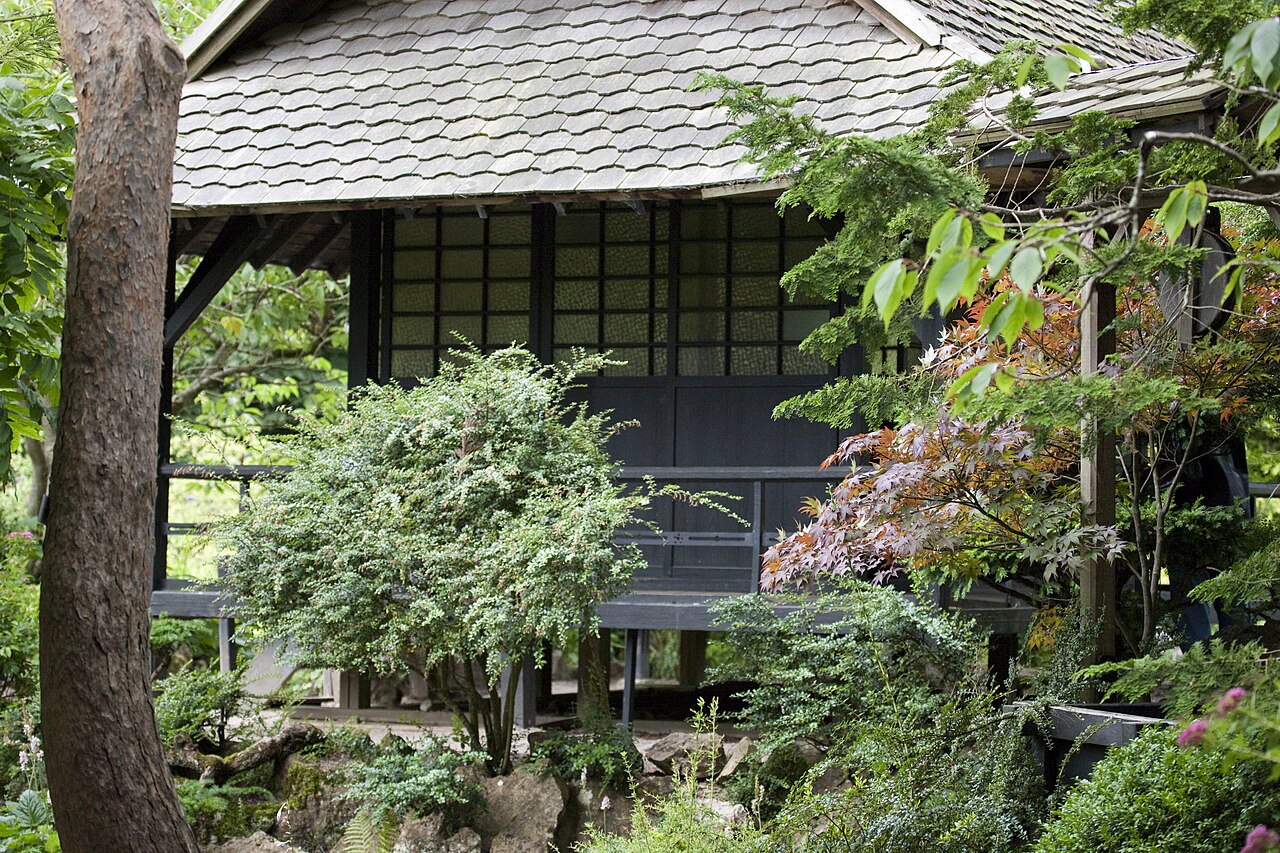
Japanese Garden at Tully
Photo: William Murphy / infomatique / CC BY-SA 2.0, modified.
Overview
The Japanese Garden at Tully, now part of the Irish National Stud & Gardens, is one of the best-known early twentieth-century Japanese gardens in Europe. It was created between 1906 and 1910 and was designed as a symbolic journey through human life, often described as the “Life of Man” or the journey of the soul. The Royal Horticultural Society of Ireland describes it as one of the oldest and finest Japanese gardens in Europe.
History
The garden was commissioned by Colonel William Hall-Walker, later Lord Wavertree, at his Tully estate in County Kildare. It was laid out by Japanese master horticulturist Tassa / Saburo Eida, assisted by his son Minoru Eida, between 1906 and 1910. The Irish National Stud’s history notes that Eida and Minoru arranged trees, plants, flowers, lawns, rocks and water to create a metaphorical journey from birth to death and beyond.
The gardens later became part of the Irish National Stud. After the Tully properties returned to the Irish Government in 1943, the Irish National Stud Company was formed in 1945, and horticultural supervision resumed in 1946.
Design features
The garden uses traditional Japanese garden principles to structure a symbolic route through human existence. Its features include water, stepping paths, lawns, rocks, planting, bridges, imported Japanese garden ornaments and a tea-house. Sources describe the garden as carefully arranged to represent stages of life, from birth through maturity, death and the afterlife.
Garden elements
Bridges
Buildings
Waters and islands
Stones
Other elements
Current status
Extant; part of the Irish National Stud & Gardens