
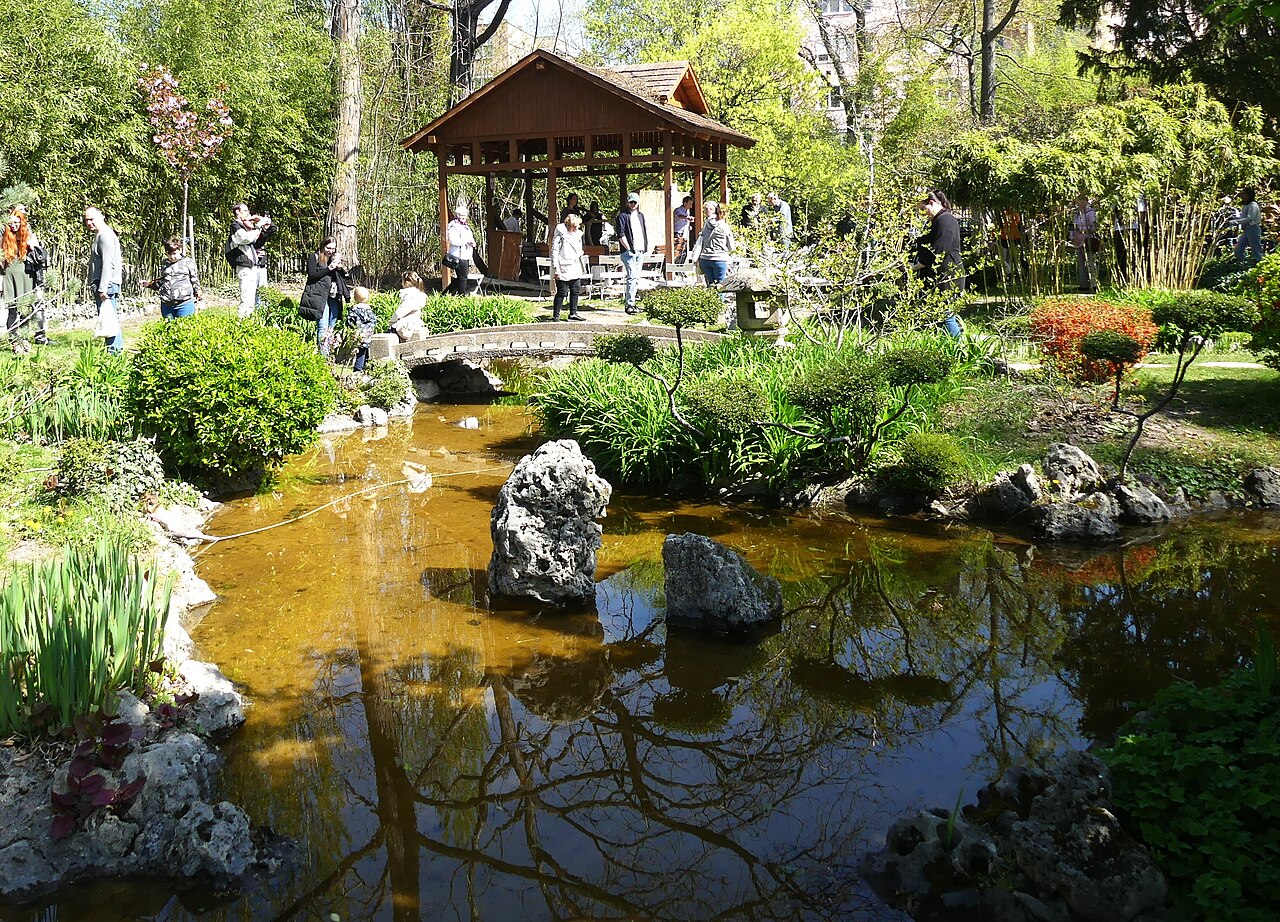
Varga Márton Japanese Garden
Photo: Elekes Andor / CC BY 4.0, modified.
Overview
The Varga Márton Japanese Garden is the historic Japanese garden of the Varga Márton Kertészeti és Földmérési Technikum in Budapest. Heritage-event descriptions identify it as Budapest’s and Hungary’s first Japanese garden, designed and built in 1928 by Varga Márton, the institution’s founder. It belongs to the school’s botanical training garden and is used both as a visitor garden and as part of the horticultural educational environment.
History
The garden was created in 1928 within the original botanical garden of the Budapest municipal horticultural school. A 2025 article states that the Japanese-style training garden was designed according to Varga Márton’s plans and inspired by garden art of the Muromachi period. The same source describes the original Japanese garden as about 1,600 m², while the present garden covers about 3,000 m².
Design features
The garden includes Japanese-style planting, Asian plant rarities, symbolic visitor routes and garden features such as the “élet ösvénye” / path of life and the “kívánság hídja” / bridge of wishes. The school’s visitor page notes that QR codes placed in the garden provide additional information for visitors.
Garden elements
Bridges
Buildings
Waters and islands
Stones
Other elements
Current status
Extant historic Japanese garden within the botanical training garden of the KMASZC Varga Márton Kertészeti és Földmérési Technikum és Kollégium. It is described by the school and Hungarian heritage-event sources as the first Japanese garden established in Budapest and Hungary, created in 1928 by Varga Márton, the founder and first director of the institution. The garden survives as an educational and public visitor garden in Zugló, with QR-code visitor interpretation and regular public opening hours listed by the school. In 2026 the school’s current notices give daily opening hours, with seasonal variation between 10:00–18:00 and 10:00–20:00.