
Hungexpo
Overview
The Hungexpo Japanese Garden was a small karesansui-style garden created within the grounds of the HUNGEXPO Budapest Congress and Exhibition Center. Opened in 2013, the compact composition used gravel, rocks and restrained planting to evoke water and islands within a highly limited exhibition-site setting. It functioned as a permanent demonstration garden associated with events at the fairground rather than as an independently operated public attraction.
History
The garden was designed and constructed in 2013 by Hungarian Japanese-garden designer Zoltán Dani, operating through the Japanese Garden Hungary initiative. It formed part of his programme of creating small publicly visible Japanese gardens and promoting traditional Japanese construction and maintenance methods in Hungary.
The garden was inaugurated in the presence of the Japanese ambassador to Hungary. Its creation coincided with Japanese-garden presentations organised at HUNGEXPO during the 2013 CONSTRUMA Garden exhibition, where Japanese Garden Hungary presented lectures on garden construction, maintenance and traditional working methods learned in Kyoto.
Unlike temporary exhibition installations, the garden was described by its designer as an open garden at HUNGEXPO and was retained for viewing during events held at the exhibition centre.
Design features
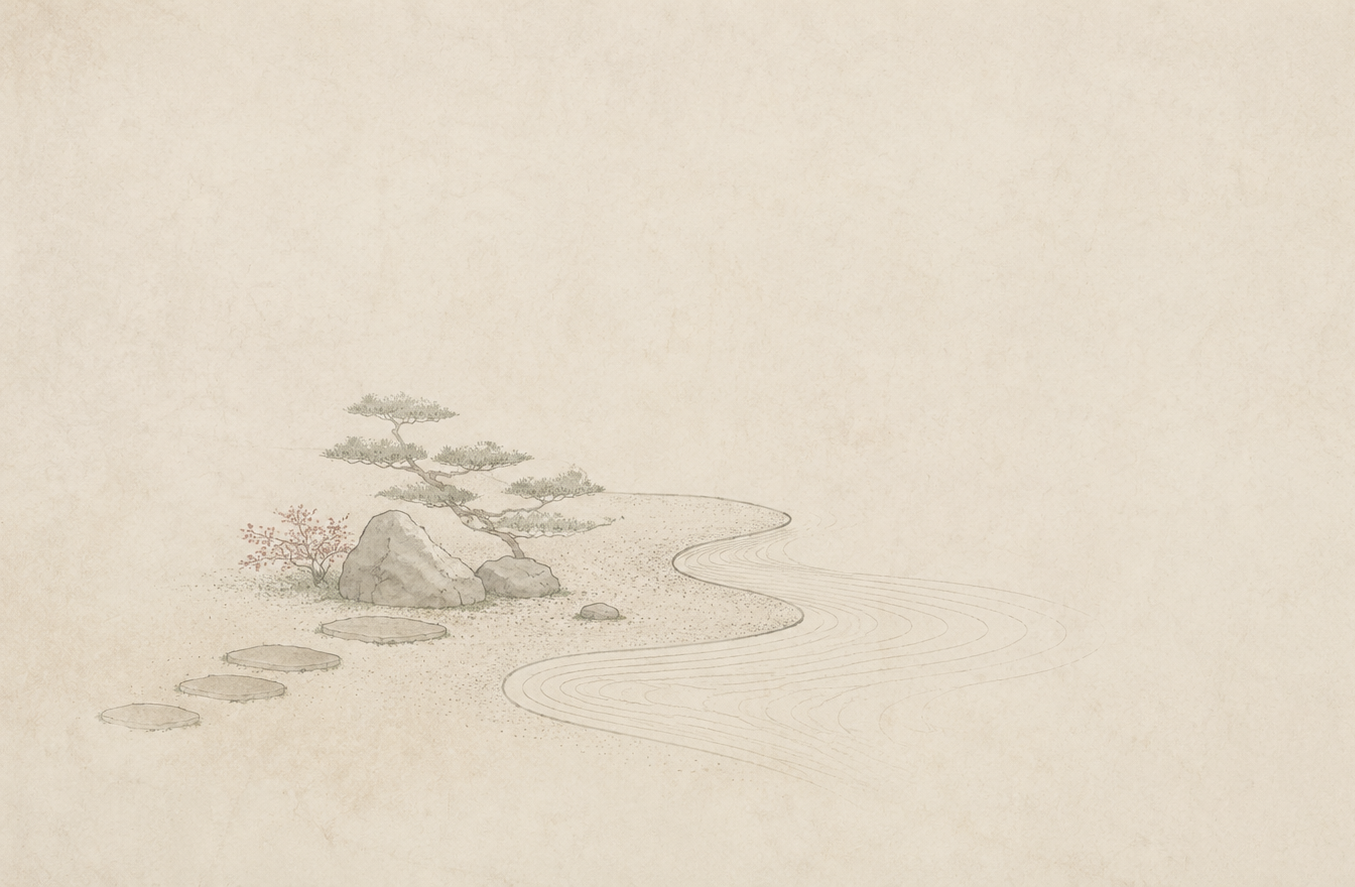
The garden occupied an area of less than 25 square metres and was conceived as a compact dry landscape composition. Pale gravel represented water, while carefully positioned rocks suggested islands, mountains or a shoreline. Its reduced scale required the entire landscape to be expressed through a small number of strongly composed elements.
Restrained planting softened the edges of the mineral composition without obscuring the primary relationship between stone, gravel and empty space. The garden was intended mainly for observation rather than circulation, making it a viewing garden within the broader architectural and event environment of HUNGEXPO.
Its location demonstrated how Japanese dry-garden principles could be adapted to a very small commercial or institutional space. The composition therefore had both an ornamental and an educational role.
Garden elements
Bridges
Enclosures
Stones
Other elements
Current status
The garden was originally accessible during HUNGEXPO events, rather than through unrestricted daily public entry. The designer’s current portfolio continues to document the project, but no recent official HUNGEXPO source confirms whether the garden survived the extensive redevelopment of the exhibition complex. Its present physical condition and accessibility should therefore be recorded as unverified.