Stadtpark Hannover
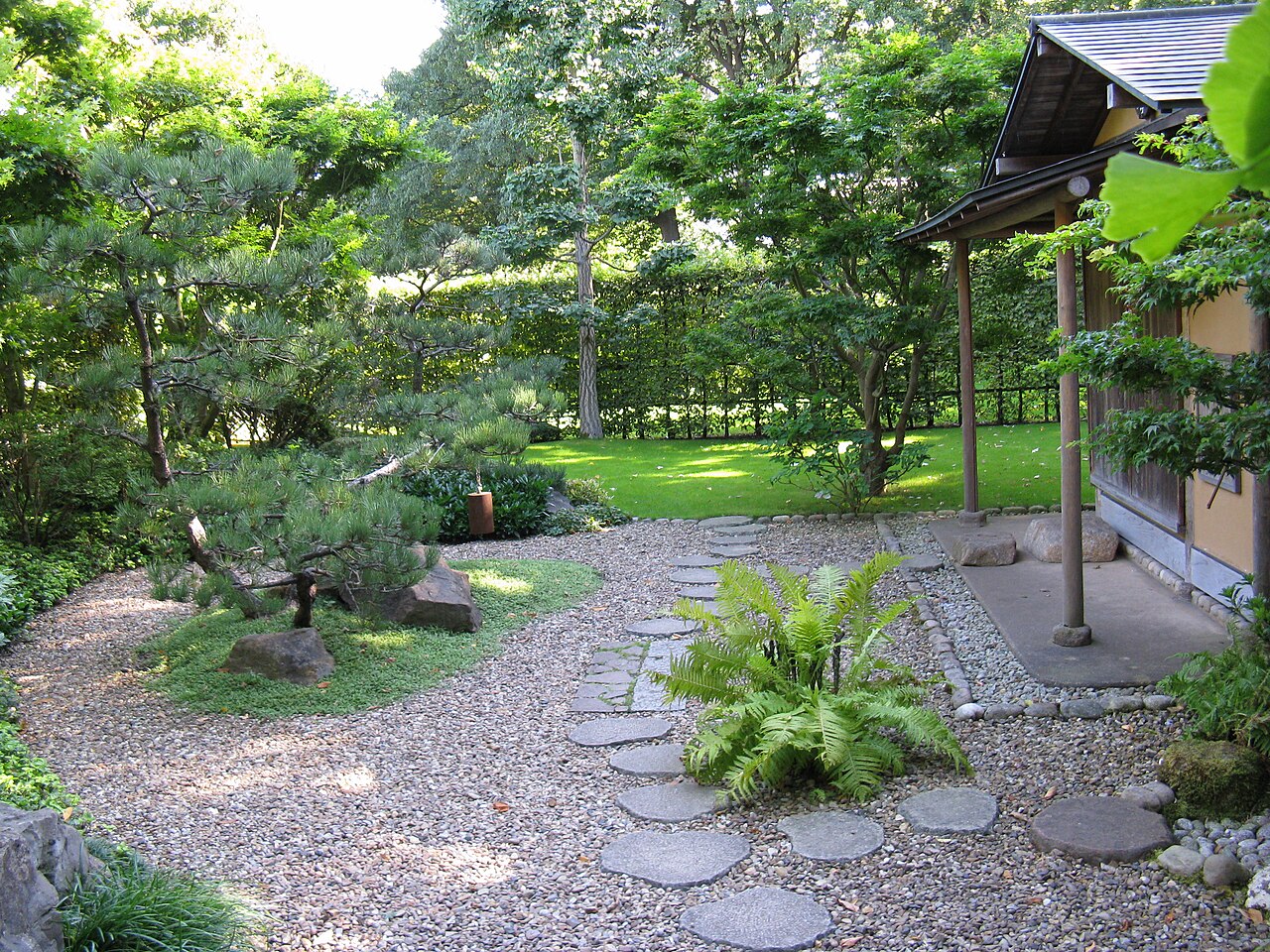
Photo: Misburg3014 / CC BY-SA 3.0, modified.
Overview
The Japanese Tea Garden in Hannover is located in Stadtpark Hannover, near the Hannover Congress Centrum. Hannover’s official visitor information states that the Japanese Tea Garden was inaugurated in 1996 and created as part of the city partnership between Hannover and Hiroshima. The garden is connected with the tea house Senshintei, where Japanese tea ceremonies are held in small groups.
History
The garden belongs to the post-war and late twentieth-century development of Hannover’s Stadtpark, a park originally shaped by the first Bundesgartenschau in 1951. The Japanese layer is connected to the Hannover–Hiroshima partnership, which developed from the two cities’ shared post-war histories and peace-oriented civic exchange. Hiroshima already had a Hannover Garden, created in 1980 as a Western-style friendship garden modelled on part of Hannover’s Herrenhausen flowerbeds.
A key element of the Hannover garden is the original Japanese tea house. Hannover’s municipal 2026 notice states that the tea house was donated to Hannover by the City of Hiroshima together with the Ueda tea school in 1988, on the fifth anniversary of the city partnership, and that it is embedded in a specially laid-out Japanese tea garden. Hannover tourism separately gives 1996 as the inauguration date of the Japanese Tea Garden in Stadtpark. Tea-ceremony sources identify the tea house as Senshintei and state that it was inaugurated in 1998 within the Hannover–Hiroshima partnership context.
The garden and tea house continue to be maintained by Hannover’s municipal green-space department, with recent professional exchange on Japanese garden art and tea-garden care involving gardeners from Hiroshima. Current tea ceremony programmes are offered in small groups, usually on selected dates, while the garden itself remains part of the public Stadtpark setting.
Design features
The garden is a Japanese tea garden associated with an original tea house in the Ueda Sōko tea tradition. The design is centred on the relationship between garden approach, tea-house setting and contemplative preparation for tea ceremony rather than on a large pond-strolling composition. Its main identity should therefore be recorded as a tea-garden / roji-related cultural garden within a public park.
Garden elements
Buildings
Enclosures
Stones
Other elements
Current status
Extant Japanese tea garden with original Japanese tea house in Hannover Stadtpark. The garden is publicly accessible as part of the park, while tea ceremonies in Senshintei are held on limited scheduled dates with advance booking.