
Kurpark Bad Krozingen
Overview
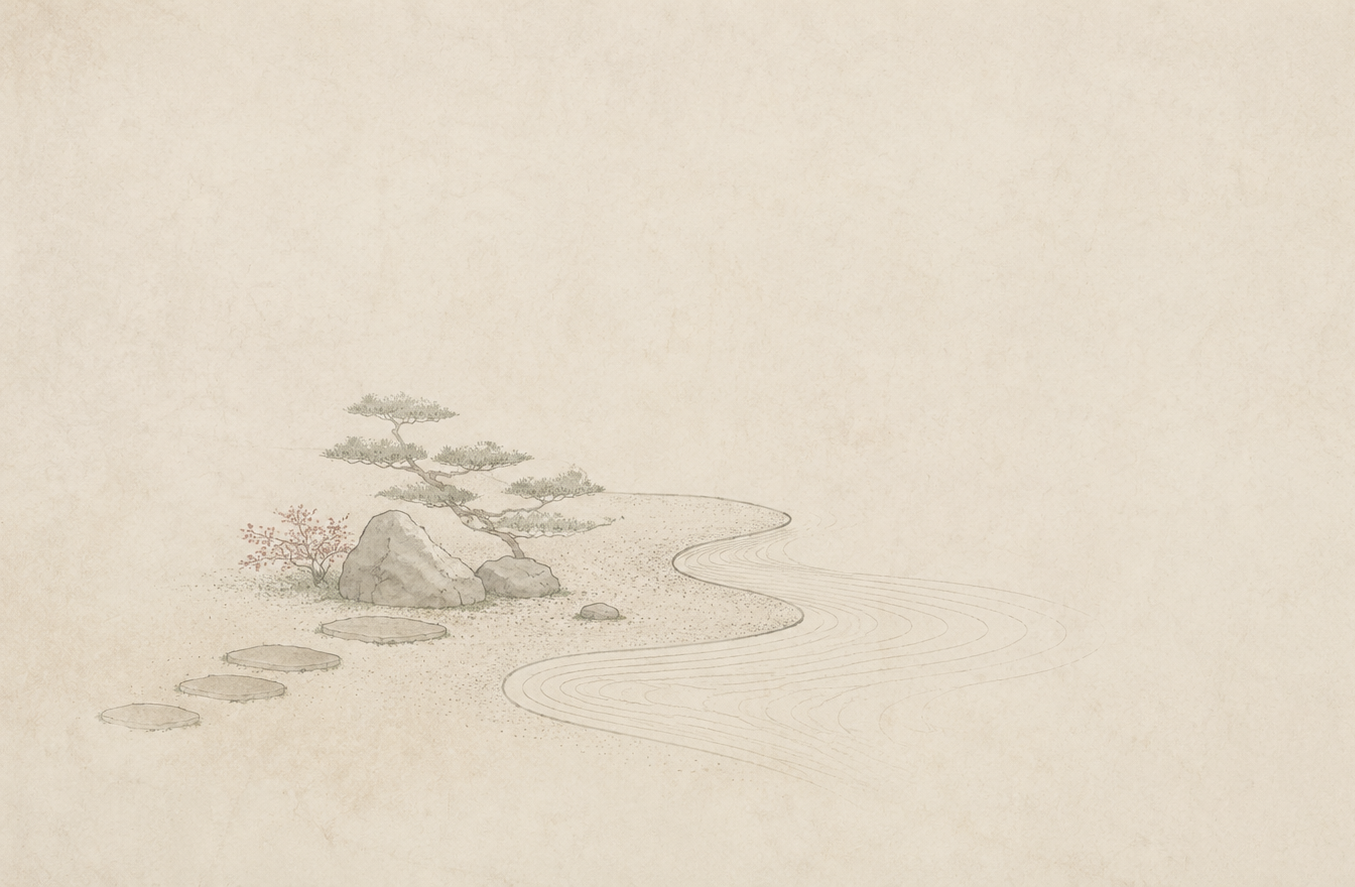
The Japanese Garden in Bad Krozingen’s Kurpark is a contemporary landscape garden created as an expression of the long-standing relationship between the German spa town and Taketa in Ōita Prefecture, Japan. Opened in 2025, the approximately 4,000-square-metre garden interprets features of the landscape around Taketa and Naoiri through rocks, watercourses, carefully trained trees and restrained planting.
History
The garden developed from the relationship between Bad Krozingen and Taketa, as well as the partnership between Bad Krozingen’s Vita Classica Therme and the Gozenyu Therme in Naoiri. Earlier Japanese-themed projects at the spa included a Japanese bath, a garden within the sauna complex and a Japanese wooden rest pavilion. The new public garden was conceived as an extension of this cultural and spa partnership and as part of the further development of the Kurpark.
Japanese gardener and landscape designer Kazuyuki Sato visited Bad Krozingen in the summer of 2024 and developed the design in collaboration with Kur und Bäder GmbH Bad Krozingen and the regional landscape contractor Fautz die Gärten. The intended composition drew upon the landscape of Taketa and Naoiri, including Mount Kujū, a ruined castle, a lake, terraced rice fields, streams, a bridge, temples and paths. Construction began in autumn 2024. From mid-October to mid-December, Sato worked on site with Japanese gardeners Masatoshi Shinozaki and Toshihiro Higashi, together with a German construction team from Fautz. Around one hundred trees and other plants were introduced during this phase.
The garden was officially inaugurated on 15 May 2025. Its construction formed a substantial tourism-infrastructure project, partly supported through a public tourism-infrastructure grant. The completed garden was opened as a freely accessible part of the Kurpark and as a living symbol of the relationship between Bad Krozingen and Taketa.
Design features
The composition presents a condensed interpretation of the mountainous landscape around Taketa. Paths lead through planted areas and past rock formations, streams, cascades, pools and a bridge. One rock-and-gravel formation represents a mountain landscape from which water descends in stages into a reflecting basin; a second water feature is formed around an upright monolith. A natural-stone structure behind one of the principal trees evokes a castle ruin. The mature trees of the surrounding Kurpark provide a backdrop comparable to borrowed scenery (shakkei).
A prominent feature is an approximately seventy-year-old pine imported from Japan, trained as a full-sized niwaki and positioned under Sato’s direction in relation to the adjoining stone composition. The planting also includes ornamental cherries, Japanese maples, azaleas, bamboo, conifers, witch hazel, cinnamon maple and evergreen groundcover. Plant forms and gradations of green predominate, with flowering plants used as limited seasonal accents.
Garden elements
Bridges
Waters and islands
Stones
Other elements
Current status
The garden survives in its original location at the western side of the Kurpark Bad Krozingen and is maintained as a public landscape. Specialist care is supported by gardeners from Fautz die Gärten, whose staff have experience in Japanese pruning and plant-management techniques. The garden is freely accessible, although the Kurpark’s opening hours may vary seasonally; guided tours are also offered on selected dates.