
Karlsruhe Zoo
Photo: H. Zell / CC BY-SA 3.0, modified.
Overview
The Japanese Garden in Karlsruhe’s Zoologischer Stadtgarten is one of Germany’s oldest Japanese gardens. It was created in 1913–1914 within the municipal Stadtgarten and later became part of the combined zoo and city garden complex. Zoo Karlsruhe describes the garden as notable for original Japanese furnishing elements and an old, diverse stock of Japanese trees and shrubs, many of them gifts from Japanese visitor delegations to the city.
History
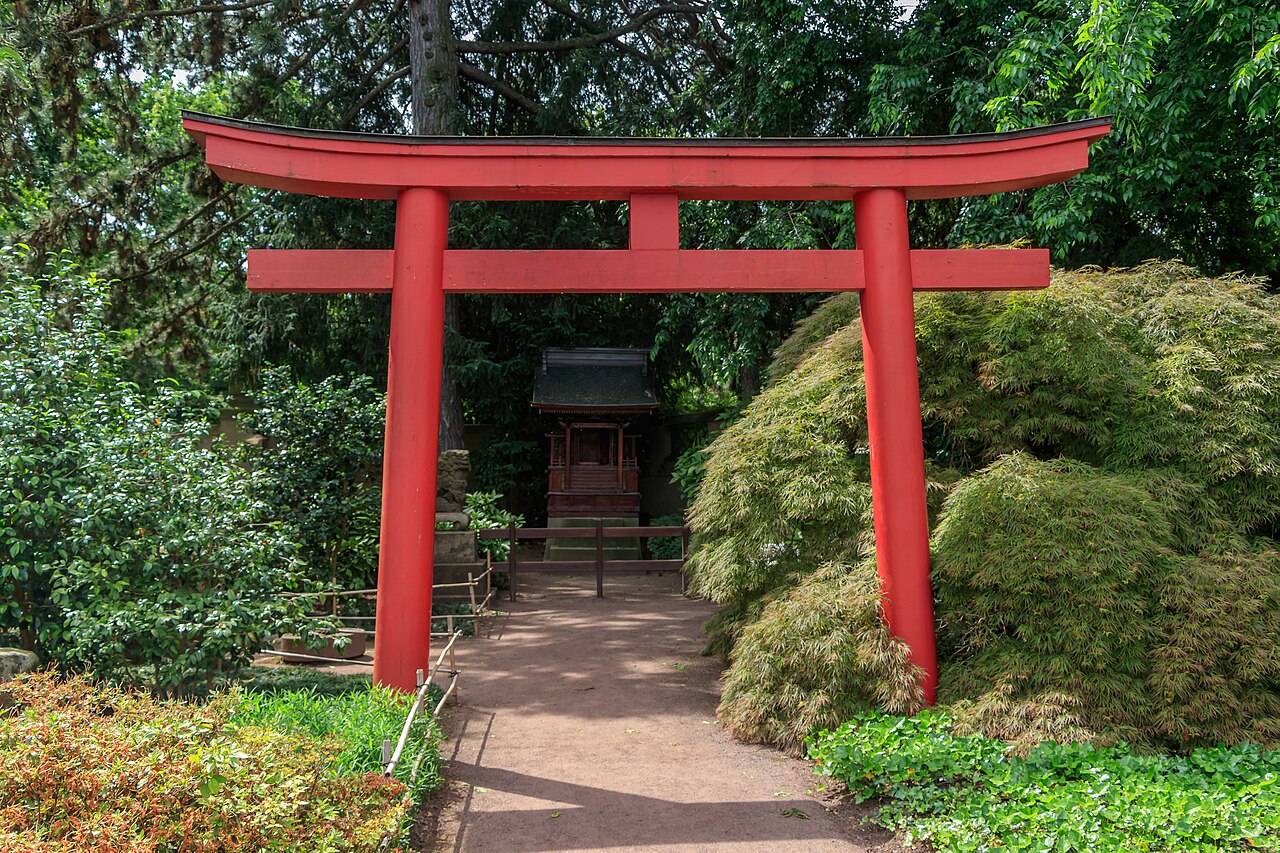
The garden was laid out in 1913–1914 under the direction of Friedrich Ries, then garden director. In 1927, Karlsruhe received a Shinto shrine by temple builder Jusiro Yamada, stone lions by sculptor Kasuke Araki, and the construction plan for a torii as gifts from the city of Nagoya. A thirteen-storey pagoda was added in 1938. These later additions helped shape the garden’s present Japanese character beyond its original pre-First World War layout.
Design features
The garden includes winding paths, ponds, Japanese planting, original Japanese ornaments and architectural features. Its characteristic elements include a tea house, torii-related structures, a Shinto shrine, stone lions, a pagoda and a mature Japanese woody plant collection. The Karlsruhe tourism site describes the garden as combining Far Eastern garden art with the natural character of the Black Forest, with paths, ponds and planting creating a calm garden setting.
Garden elements
Bridges
Buildings
Enclosures
Waters and islands
Stones
Shinto elements
Other elements
Current status
Extant historic Japanese garden within the Zoologischer Stadtgarten Karlsruhe, a combined zoo and municipal garden. The garden was first laid out in 1913–1914 under garden director Friedrich Ries and is described by Zoo Karlsruhe as one of the oldest Japanese gardens in Germany. It has been repeatedly expanded and enriched with original Japanese features, including gifts from Japanese delegations and from the city of Nagoya. Today it remains part of the public visitor route inside the ticketed Zoologischer Stadtgarten. A traditional tea house opened in 2018, adding a contemporary cultural layer to the historic garden.