
Overview
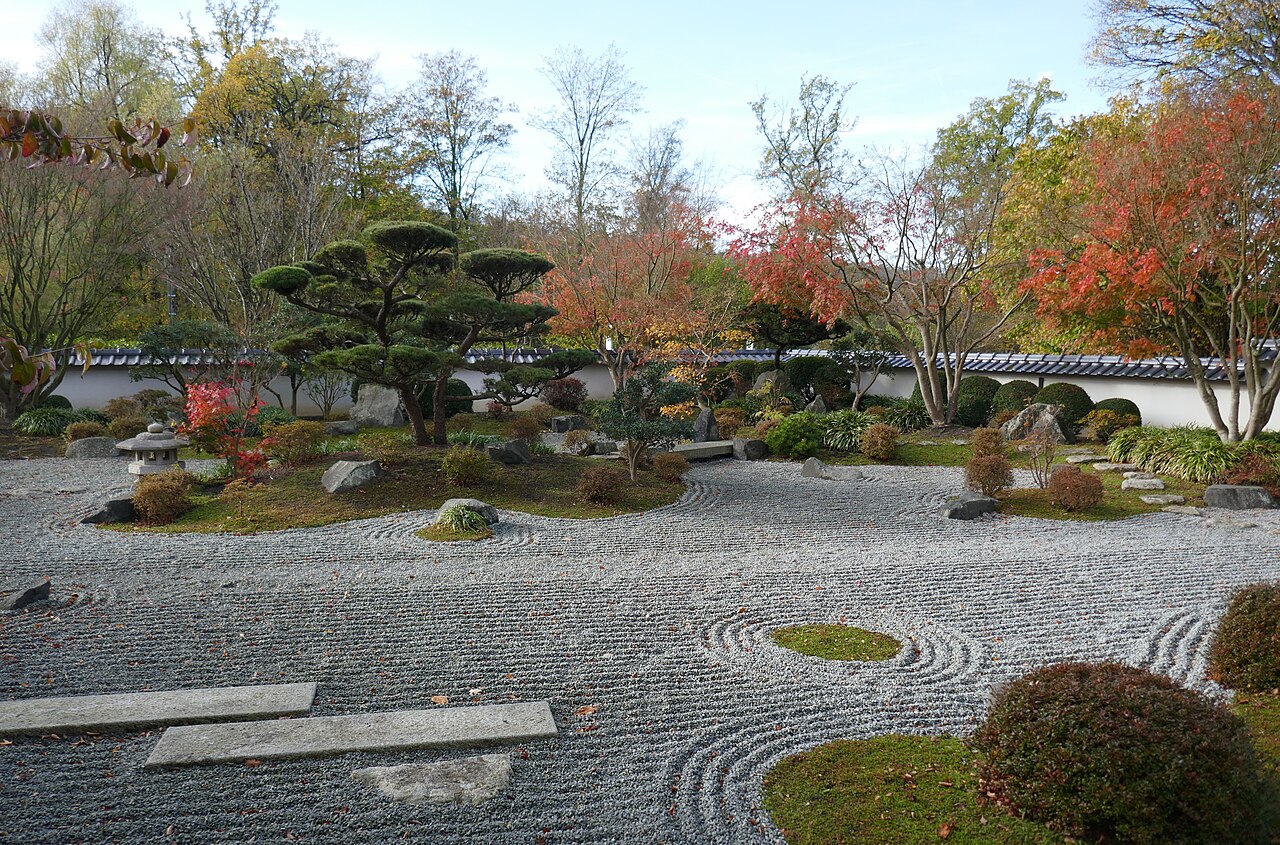
The Japanese Garden in Bielefeld is an enclosed karesansui viewing garden beside the Lindenhof training and conference hotel in the Bethel district. Created in 2003, the almost 1,000-square-metre composition follows the style of Japanese gardens of the early Edo period. Gravel, rocks, stepping stones, sculptural trees and seasonal planting form an idealised landscape intended to be contemplated from outside rather than physically entered.
History
The first design for the garden was prepared in 1998 by Mainz-based landscape architect Hartmut R. Raible. The project was initiated by the Deutsch-Japanische Gesellschaft Bielefeld e.V., which commissioned Raible and developed the garden in cooperation with the von Bodelschwinghsche Stiftungen Bethel. It was completed and opened in 2003 beside the Lindenhof training hotel of Bethel’s vocational education centre.
The garden is dedicated to the Japanese imperial couple, who visited the Bethel institutions in 1993. Patronage during construction was provided by the then Japanese Crown Prince Naruhito and German Federal President Johannes Rau, giving the project an additional role in German-Japanese cultural relations.
Design features
The garden is a dry landscape garden designed primarily for viewing. Approximately 70 tonnes of rock and gravel were used to create an abstract landscape governed by asymmetrical arrangements of stone, colour and form. Although stepping stones appear to lead through the composition, they guide the observer’s eye rather than provide an actual visitor route.
Its spiritual and visual centre is a Crane Island, planted with a valuable twin-trunk trained pine. The crane symbolises happiness and longevity, while the shaped pine reinforces the island’s sculptural character. Other prominent features include a snow-viewing lantern and mature garden bonsai approximately eighty to ninety years old.
The planting includes azaleas, flowering cherries, Japanese maples, shrubs and perennials, producing marked seasonal changes. Spring is characterised by cherry and azalea blossom, while maples and cherries provide bronze and red foliage in autumn.
A surrounding wall separates the garden from its urban setting and frames it as a self-contained composition. Carefully positioned windows and a gate provide controlled views into the landscape. The wooden entrance gate symbolises heaven and is opened only for special occasions and festivals.
Garden elements
Bridges
Enclosures
Stones
Other elements
Current status
The garden remains maintained by the Deutsch-Japanische Gesellschaft Bielefeld e.V. and can be viewed throughout the year without charge. The enclosed composition is normally observed through the gate, wall openings and visitor platform; entry into the garden is generally restricted to special events.