
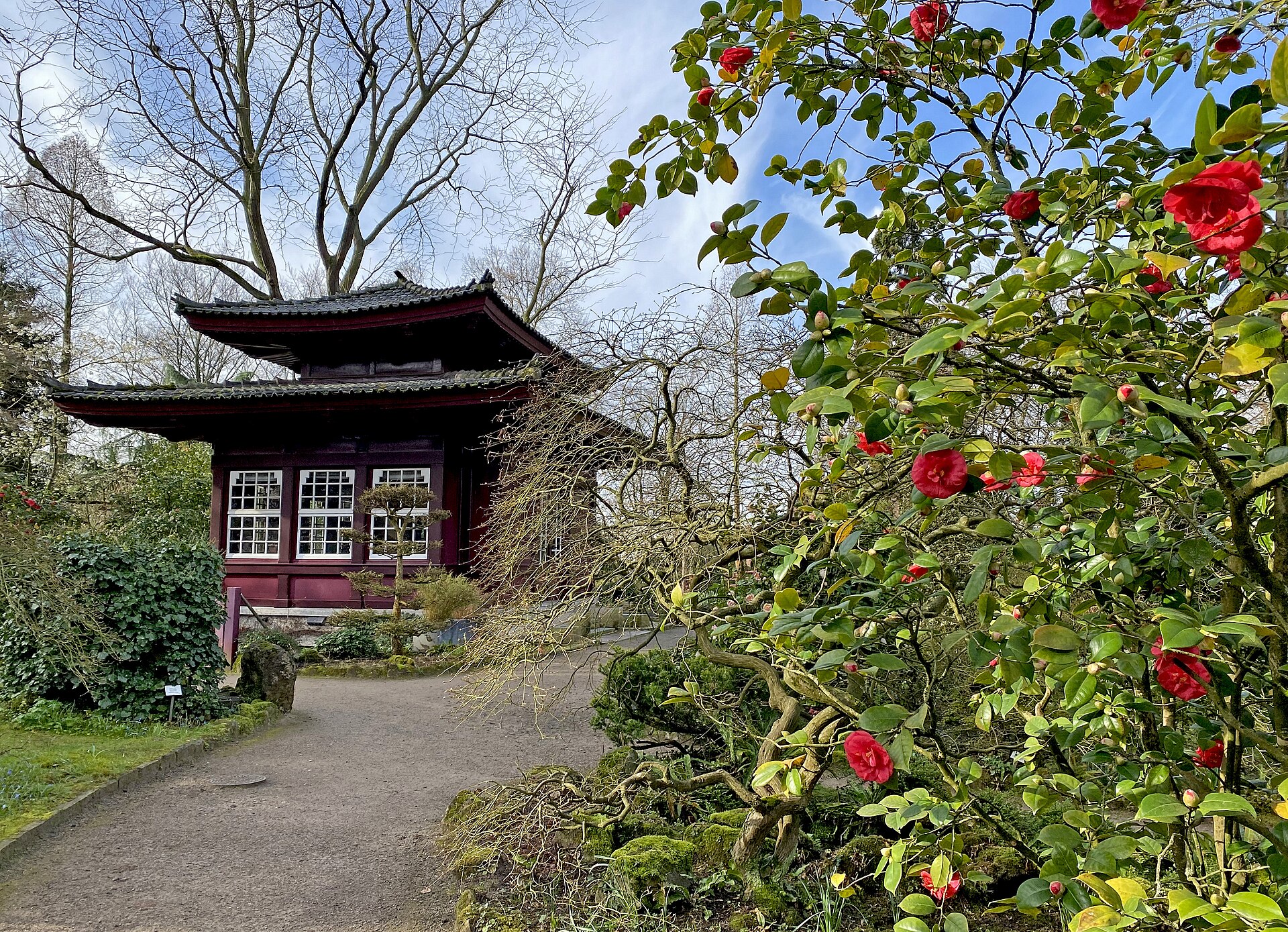
Carl-Duisberg Park
Photo: DiAuras / CC BY-SA 4.0, modified.
Overview
The Japanese Garden in Carl-Duisberg-Park is a historic Japanese-style garden in Leverkusen, created on the initiative of Carl Duisberg, then General Director of Farbenfabrik Friedrich Bayer & Co. The City of Leverkusen and Bayer both date the garden to 1912, while some industrial heritage sources give 1913. The garden is now one of the best-known public green spaces in Leverkusen and forms part of the wider Carl-Duisberg-Park.
History
The garden was first laid out beside Carl Duisberg’s villa as part of the early twentieth-century Bayer landscape at Leverkusen. After a world trip in 1926, during which Duisberg visited Japan, he expanded the existing garden under the influence of Japanese garden culture. In 1960, the Japanese Garden was moved to its present location, about 250 metres south of the original site, and the new garden was completed in 1961. Since the 1950s, it has been publicly accessible during the day.
Design features
The garden covers about 15,000 m² and includes ponds with koi and turtles, stepping-stone paths, East Asian planting, stone lanterns, arched gates, a covered bridge and a tea-house-like building. The “Mikado Bridge” is modelled after a bridge in the temple city of Nikkō. Planting includes Japanese maples, ornamental cherries, camellias, grasses and other East Asian species, though the garden is best treated as a Japanese-style / East Asian garden rather than a strictly classical Japanese garden.
Garden elements
Bridges
Buildings
Enclosures
Waters and islands
Stones
Shinto elements
Other elements
Current status
Extant and publicly accessible Japanese-style garden within the Carl-Duisberg-Park, on the edge of the CHEMPARK / Bayer industrial complex. The original garden was created beside Carl Duisberg’s villa in 1912/1913, expanded after Duisberg’s 1926 world trip, and relocated about 250 metres south to its present site in 1960; the relocated garden was completed in 1961. Today it survives as a 15,000 m² East Asian / Japanese-style garden with ponds, bridges, lanterns, gates, planting and a tea-house-like structure. It has been open to the public during the day since the 1950s and is now part of the European Garden Heritage Network. Some original features and sculptures have been lost, moved or replaced, including bronze figures removed after thefts in 2013.