
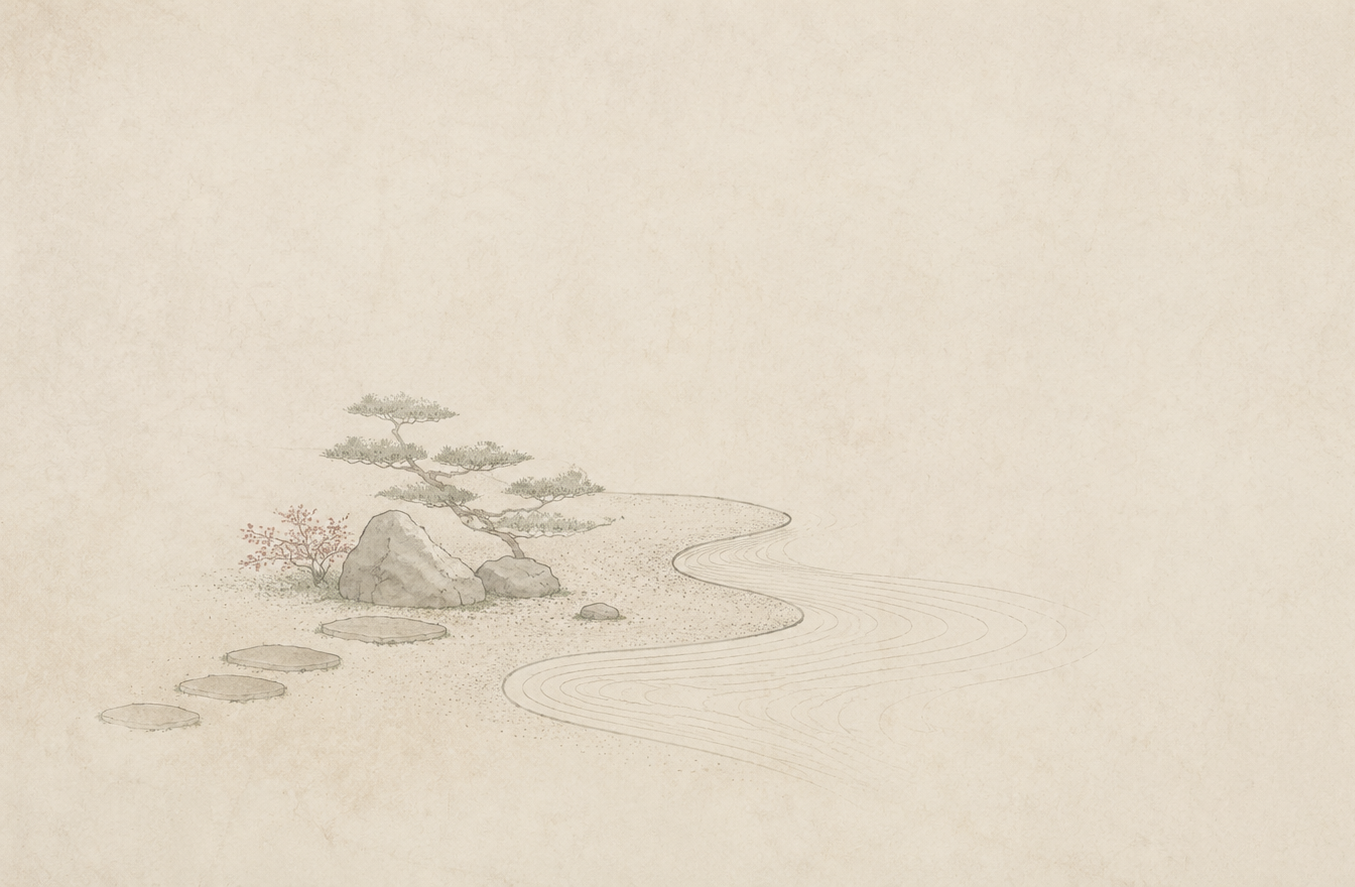
Shizen no Sei
Overview
Shizen no Sei, meaning “Spirits of Nature,” is a privately developed therapeutic Japanese garden in Talencieux, Ardèche, France. Created by French gardener and horticultural therapist Frédérique Dumas, it combines Japanese-inspired garden spaces, sculpted niwaki, small courtyard gardens and areas used for meditation, horticultural therapy and practical training. Rather than representing one historical garden form, it functions as an evolving landscape devoted to the relationship between gardening, nature and personal wellbeing.
History
The garden was developed by Frédérique Dumas around a restored former farm in Talencieux. Dumas is trained in agronomy and arboriculture and has specialised in Japanese pruning and garden practice since 2008. She subsequently founded an academy devoted to Japanese pruning, niwaki and Japanese-garden creation.
Shizen no Sei became both her personal demonstration garden and a teaching environment. By the mid-2010s, it was being promoted through the local tourism network as a Japanese garden offering guided visits, introductory courses, professional workshops, niwaki training and horticultural-therapy programmes. The garden was clearly documented by 2014–2016, although an exact initial construction year has not been reliably published.
The garden has also been associated with Niwakitherapy, Dumas’s therapeutic approach combining Japanese pruning, creative garden work, meditation and emotional support. This educational and therapeutic purpose distinguishes it from a conventional ornamental visitor garden.
Design features
The property contains several interconnected Japanese-inspired spaces rather than a single unified composition. Documented elements include compact tsuboniwa courtyard gardens, shaped niwaki and areas designed for close observation, contemplation and practical gardening exercises.
The design places particular emphasis on the sculptural training of trees and shrubs. Through selective pruning, branch positioning and the controlled exposure of trunks, ordinary garden plants are transformed into niwaki that suggest mature trees shaped by wind, weather and age. The garden therefore serves as a working demonstration of Japanese pruning techniques as well as a designed landscape.
Its individual spaces are used for meditation, horticultural therapy and teaching. The composition appears to have evolved incrementally around the existing farm and nursery, incorporating several small garden types and functional training areas. Modern Japanese garden is therefore more appropriate than assigning the entire property to a single historical category such as a tea, dry or strolling garden.
Garden elements
Enclosures
Stones
Other elements
Current status
Recent references continue to associate Shizen no Sei with Frédérique Dumas and her Japanese-garden and therapeutic activities. It is a private working garden rather than a regularly open public attraction; visits and courses have historically been available through prior arrangement.