
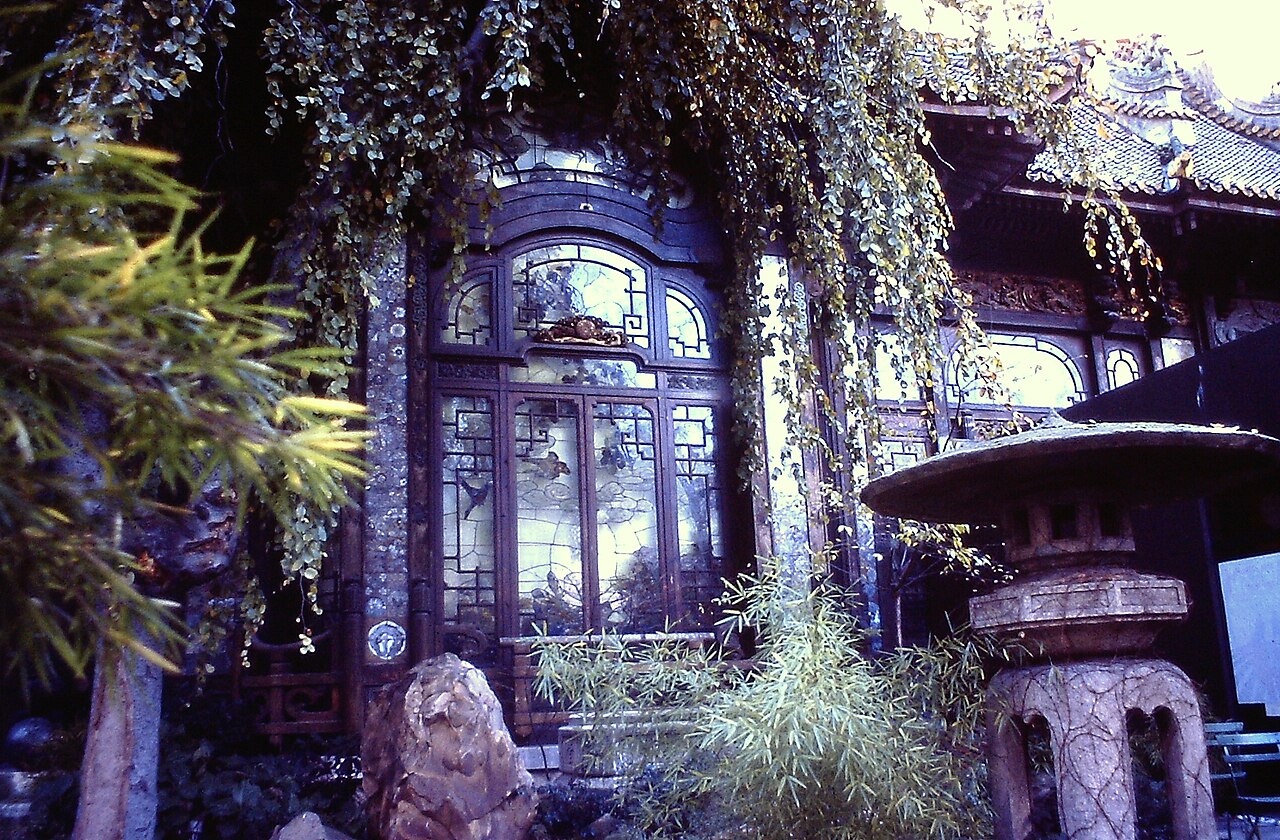
Pagoda Cinema garden
Photo: Guerinf / CC BY-SA 3.0, modified.
Overview
The Japanese garden at La Pagode, also known as the Pagoda Cinema garden, was a small Japanese-style garden attached to the historic La Pagode cinema at 57 bis rue de Babylone in the 7th arrondissement of Paris, France. La Pagode was built in 1896 by architect Alexandre Marcel for François-Émile Morin, director of Le Bon Marché, and later converted into an art-house cinema in 1931. The garden was part of the site’s Japanese-inspired architectural and cultural identity.
History
La Pagode was originally built in 1896 as a Japanese-style reception hall, during the height of European Japonisme. It later became a cinema in 1931 and was known for its Japanese room, distinctive exterior and peaceful garden. The building and garden were listed as historic monuments in 1983. The cinema closed in 2015 after a dispute between the owner and tenants, and later entered a renovation phase.
Design features
The garden was a small urban Japanese-style garden of around 200 m², associated with the cinema’s tea-garden atmosphere. Sources describe it as a Japanese tea garden or bamboo garden, attached to the listed La Pagode building. It functioned as a quiet courtyard-like outdoor space for the cinema, complementing the Japanese-style architecture and interior decoration.
Garden elements
Stones
Other elements
Current status
La Pagode cinema closed in 2015 and has been undergoing a major restoration and redevelopment project. The building and garden are listed historic monuments, but in 2020 the cutting of trees in the garden during renovation works caused public controversy. Current sources describe the site as closed for renovation rather than operating as a regular public cinema garden. (2026)