
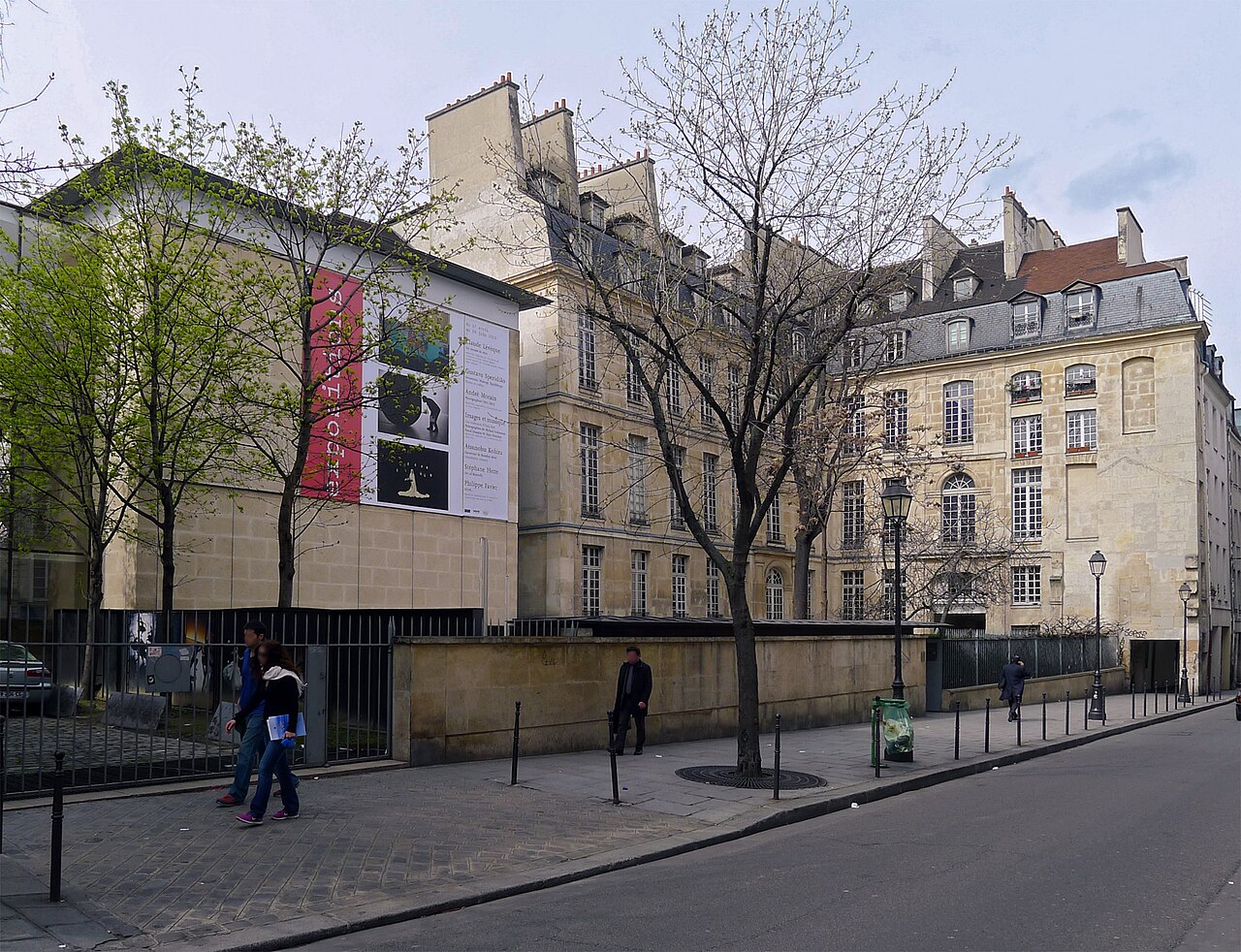
Maison de la Photographie
Photo: Mbzt / CC BY-SA 3.0, modified.
Overview
The Jardin Niwa is a compact Japanese dry garden installed in the courtyard of the Maison Européenne de la Photographie in Paris. Created by Japanese photographer and light artist Keiichi Tahara, the garden links the visual language of the karesansui tradition with the museum’s focus on photography, particularly the interaction between light, material, emptiness and perception. Its restrained composition of gravel and stone was conceived as both an artwork and a space for quiet contemplation.
History
The garden was created in 2001, when Keiichi Tahara presented work at the Maison Européenne de la Photographie. Designed as a permanent outdoor installation, it occupied the courtyard between the museum and the Rue de Fourcy. The work was titled Jardin Niwa, although niwa itself simply means “garden” in Japanese.
Tahara had participated in the inaugural exhibition of the Maison Européenne de la Photographie in 1996 and maintained a close association with the institution. His broader artistic practice investigated the effects of light upon architecture, surfaces and space. The garden extended these concerns into a three-dimensional landscape composition, using stone, gravel and changing natural light rather than photography alone.
The installation was later presented by the museum as an emblematic work by Tahara and remained associated with retrospectives and commemorations of the artist following his death in 2017.
Design features
The garden takes the form of a small square karesansui composition. Its surface is covered with relatively coarse gravel containing contrasting black and white stones, possibly referring to the tonal language of black-and-white photography. Larger stones rise from the gravel as compact sculptural forms, while the surrounding architecture frames the garden like a photographic image.
The design focuses on the relationship between solid matter and empty space. According to Tahara’s own description, the garden was intended to bring together the material presence of natural elements with the spiritual quality of emptiness. The composition invites stillness, reflection and an awareness of changing light across the stones and gravel.
Unlike a traditional temple dry garden, the Jardin Niwa also functions as a site-specific contemporary artwork. Its meaning is closely tied to the museum: light acts both as the basis of photography and as an active element continually altering the appearance of the garden.
Current status
The Jardin Niwa remains identified by the Maison Européenne de la Photographie as an emblematic permanent work by Keiichi Tahara. It is situated within the museum complex and is normally encountered as part of a visit to the institution.