
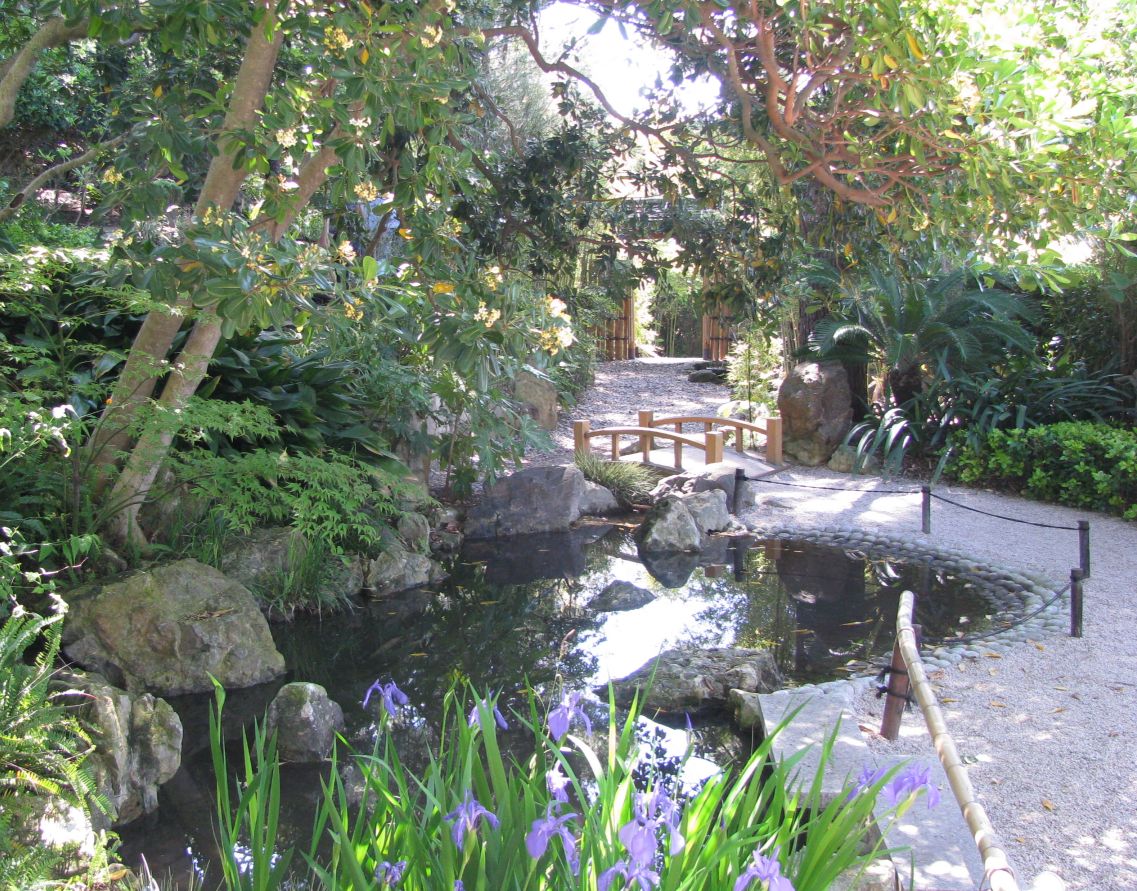
Cho Seki Tei
Photo: Testus / CC BY-SA 3.0, modified.
Overview
The Japanese Garden at Villa Ephrussi de Rothschild is one of the nine themed gardens surrounding the villa at Saint-Jean-Cap-Ferrat. The official site names it Cho-Seki-Tei, meaning “garden where one can calmly listen to the pleasant sound of the waves at twilight.” The villa garden ensemble includes French, Spanish, Florentine, stone, Japanese, exotic, Provençal, rose and Sèvres-themed gardens.
History
The original villa and garden estate were created for Béatrice Ephrussi de Rothschild between 1905 and 1912, but the Japanese Garden should be linked to a later phase. After Béatrice’s death in 1934, the estate passed to the Institut de France / Académie des Beaux-Arts. That same year, landscape architect Louis Marchand was entrusted with designing several themed gardens, including the Spanish, Florentine, Japanese and Mexican gardens, and with restoring water to the fountains and renovating the French formal gardens. The present Japanese garden, Cho-Seki-Tei, is also associated with later work by Professor Shigeo Fukuhara.
Design features
The garden is water-centred and includes white-sand patterns, a traditional wooden pavilion, bridge, lanterns and basins. Its current interpretation presents a compact Japanese garden atmosphere within the larger Mediterranean villa-garden sequence, rather than a fully independent historic Japanese estate garden.
Garden elements
Bridges
Enclosures
Waters and islands
Stones
Other elements
Current status
Extant Japanese garden within the nine themed gardens of Villa Ephrussi de Rothschild, now a public museum and heritage visitor site. The Japanese garden is known as Cho-Seki-Tei, described by the official villa site as a “zen world” with water, white-sand motifs, a wooden pavilion, bridge, lanterns and basins. It should be treated as a named thematic Japanese garden within a Belle Époque villa garden complex, but with a layered history: the wider gardens were created in the early twentieth century, while the present Japanese garden is specifically attributed to Professor Shigeo Fukuhara. The villa and gardens are open to the public with ticketed access.