Setagayapark
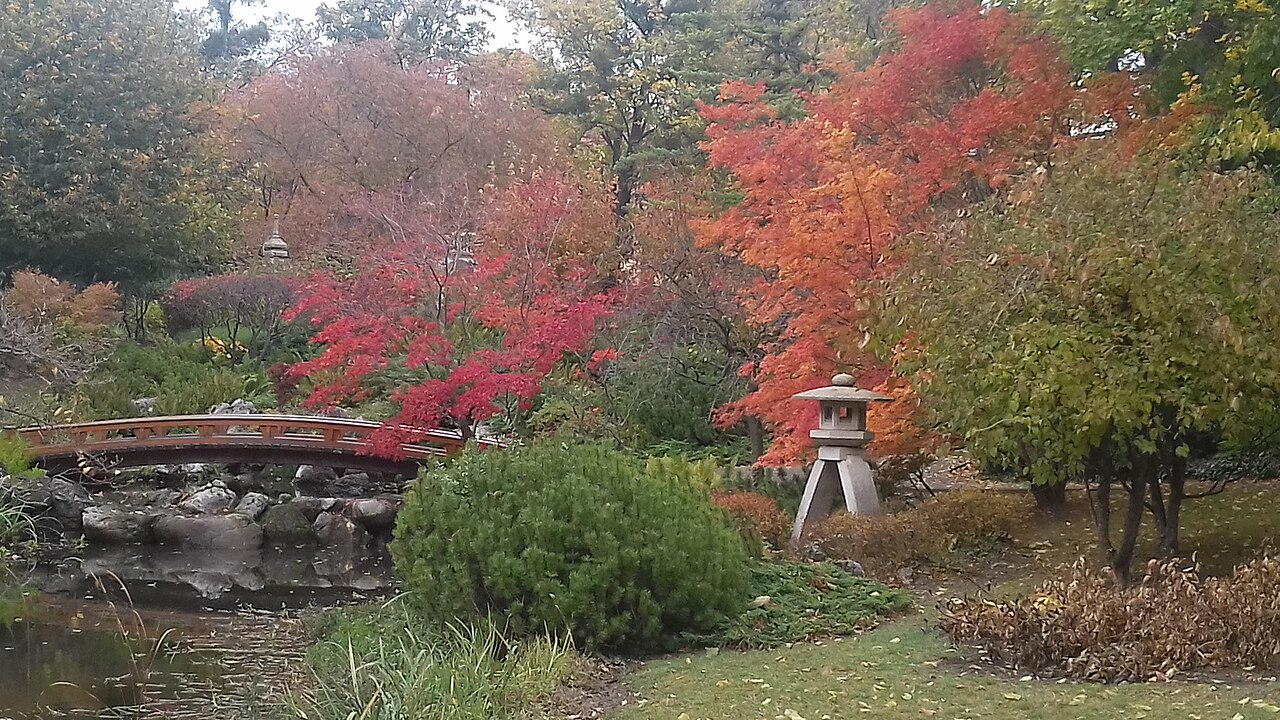
Photo: Clemens Mosch / CC BY-SA 4.0, modified.
Overview
Setagaya Park is a Japanese garden in Vienna’s Döbling district, created in connection with the long-standing relationship between Döbling and Setagaya, a special ward of Tokyo. The City of Vienna states that the park was designed in 1992 by Japanese landscape gardener Ken Nakajima and laid out near a retirement home. Nodaigarden also records the garden as Setagayapark in Döbling, with 1992 as its date opened and classifies it as a Stroll Garden.
History
The garden originated from cultural and friendship agreements between Vienna’s 19th district, Döbling, and Tokyo’s Setagaya district. The official Vienna page presents it as a landscape expression of these long-term district-level relations. German-language historical summaries add that the park was planned between 1990 and 1992 and officially opened in May 1992.
Ken Nakajima, already known internationally for Japanese garden projects outside Japan, designed the garden as a compact Japanese landscape adapted to the sloping urban site. Nodaigarden places the garden in the category of gardens donated by Japanese municipalities, which fits the Setagaya–Döbling friendship context.
Design features
Setagaya Park emulates a Japanese landscape with ponds, streams, densely planted garden elements, stones and typical Japanese garden features. Nodaigarden identifies the style as chisen-kaiyū-shiki, a pond-strolling landscape garden, and lists elements including a pond, lantern, stone pagoda, chōzubachi / water basin and wooden bridge. Vienna’s tourism page gives the park area as about 4,000 m².
Garden elements
Bridges
Buildings
Waters and islands
Stones
Other elements
Current status
xtant public Japanese garden in Vienna’s 19th district. It remains freely accessible as a municipal park and is maintained by the City of Vienna.