
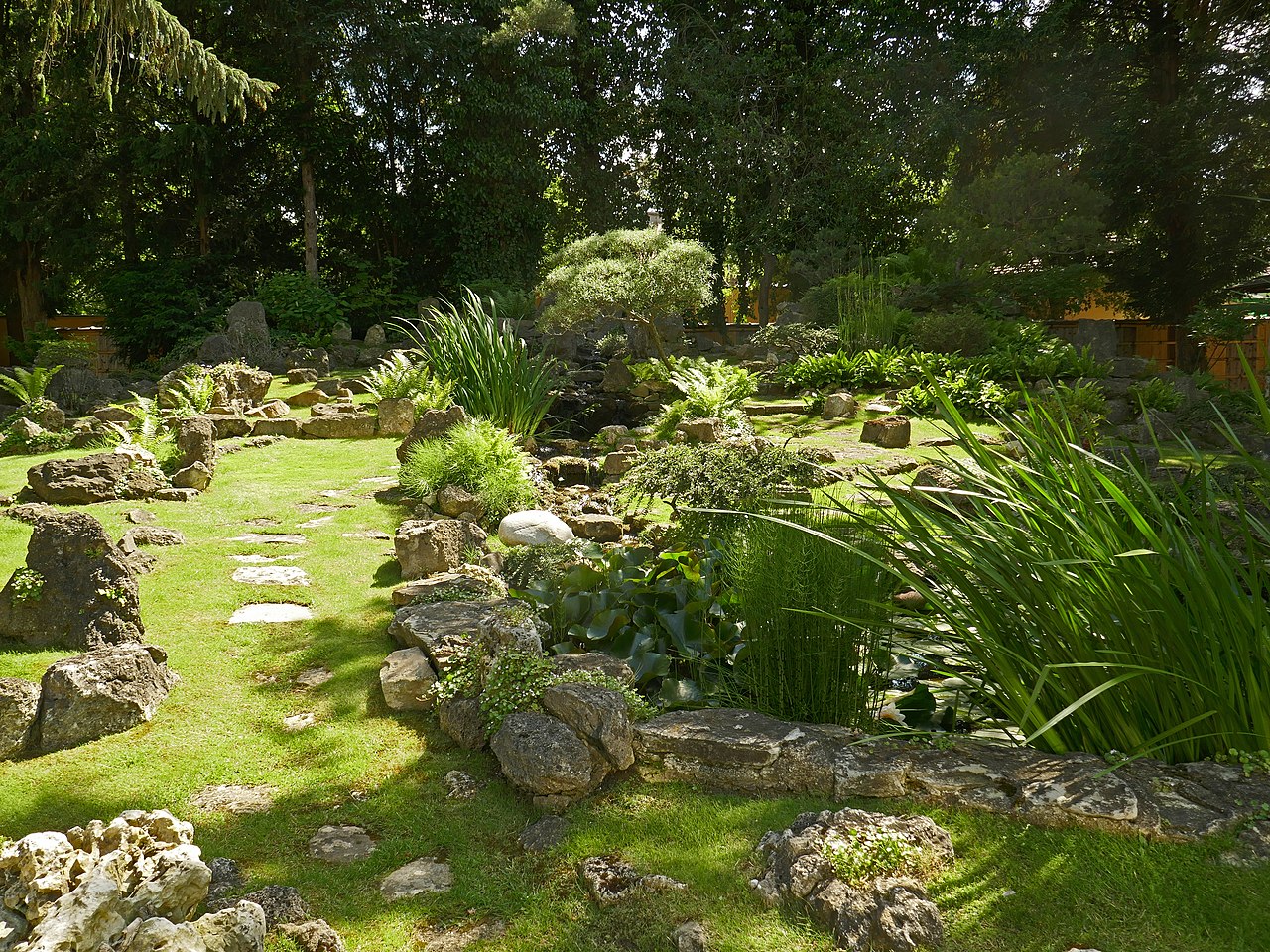
Japanese Garden of Schönbrunn
Photo: Geolina163 / CC BY-SA 4.0, modified.
Overview
The Japanese Garden of Schönbrunn is a small historic Japanese-style garden near the Palm House in Schönbrunn Palace Park. It was created in 1913 by Schönbrunn gardeners and is now presented as a symbol of Japanese-Austrian friendship. Vienna’s official visitor information describes it as a Japanese rock garden hidden in the Baroque palace park, restored in the late 1990s after being forgotten for decades.
History
The garden was laid out in 1913, during a period of strong European interest in Japanese garden art. After the First World War, it ran wild and gradually disappeared from public memory. It was rediscovered in 1996, then restored in the late 1990s with help from Japanese specialists. The Austrian Federal Gardens state that, when the garden was rediscovered, two new representative Japanese gardens were also created as a Trockengarten and Teegarten.
Design features
The garden is primarily a Japanese rock garden ensemble near the Palm House. The restored site includes rock arrangements, dry-garden elements and a tea-garden component. The current interpretation combines the rediscovered 1913 garden with late-1990s restoration and newly added Japanese garden sections. Because of this layered history, the site is best treated as a historic Japanese-style garden with reconstructed / restored elements, rather than as a completely intact original 1913 garden.
Garden elements
Buildings
Enclosures
Waters and islands
Stones
Other elements
Current status
Extant and restored Japanese rock garden within the wider Schönbrunn Palace Park. The original garden was created south of the Palm House in 1913 by Schönbrunn gardeners, later became overgrown after the First World War and was forgotten for decades. It was rediscovered in 1996 and restored at the end of the 1990s with Japanese expert assistance. The present site includes the rediscovered historic Japanese garden and two newly created representative Japanese garden sections described by the Austrian Federal Gardens as a dry garden and a tea garden. The garden is visible within the publicly accessible Schönbrunn park, but the Japanese garden itself is generally viewed from the perimeter rather than entered.